Can cats eat corn? All the information at a glance
Every time I prepare corn in the kitchen, my cat is immediately there. 🤔
Whether in a salad, as a topping for soup, or simply as a snack—as soon as I open a can of corn, there it is, tail up, ears pricked. And every time I ask myself:
Can cats eat corn or is it unhealthy for them?
Maybe you know this too. Our furry friends are curious – even about foods that aren't actually intended for them. In this blog, you'll learn everything about corn for cats: Is it dangerous, useless, or perhaps even beneficial? And what does science say about it?
What is actually in corn?
Before we answer whether cats can eat corn, let's take a look at the ingredients:
Carbohydrates : Corn is rich in starch – a quick source of energy.
Fiber : Promotes digestion – at least in humans.
Vitamins : Especially B vitamins such as B1, B5 and folic acid.
Minerals : potassium, magnesium, iron.
That doesn't sound so bad at first – for us humans. But what does that mean for cats?
When is corn unproblematic?
In small quantities, occasionally, and well prepared – then corn is usually not a problem for cats.
Suitable forms:
Cooked corn: Best eaten plain, without salt, butter or spices.
Fresh corn from the cob: Cooked thoroughly and cooled.
Corn flour in feed: harmless in very small quantities.
Important instructions:
Do not feed daily – but as an occasional snack.
Only small amounts – 1-2 teaspoons per week are sufficient.
-
No seasoned products – so stay away from canned corn with sugar, salt or butter.
When is corn harmful to cats?
Not all corn is harmless. It depends on the preparation—and also the quantity.
Avoid at all costs:
Canned corn with sugar or salt: These additives are harmful to cats.
Corn chips, tortillas, etc.: Contain spices, fat, and often onion or garlic powder (toxic!).
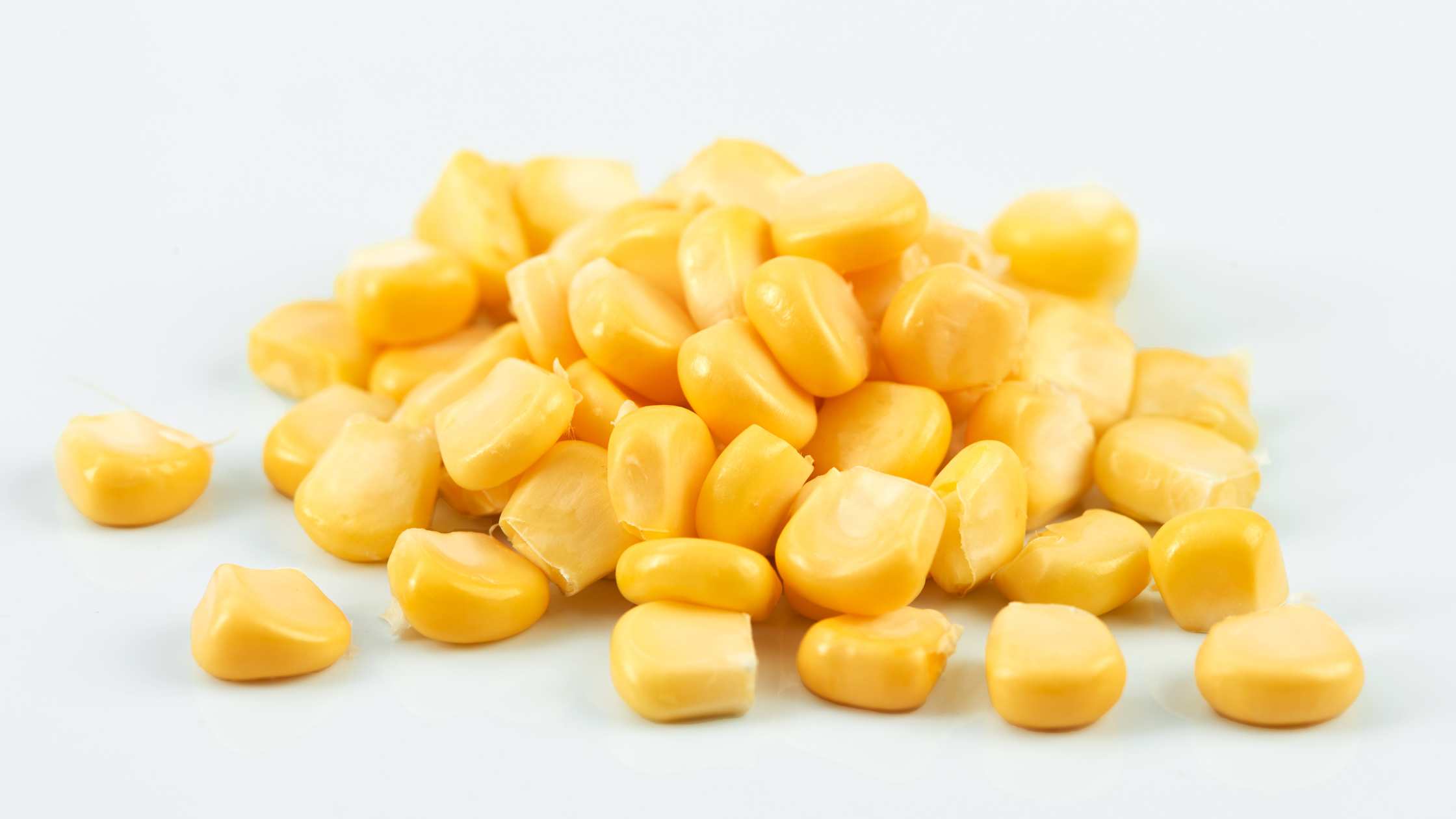
Raw corn kernels: Difficult to digest and a potential choking hazard.
Popcorn with butter or salt: Only unseasoned and a maximum of 1-2 pieces.
Also read: What shouldn't cats eat? 10 toxic foods
Sugar in corn: An underestimated risk
Processed corn in particular often has added sugar – and this can be dangerous for cats.
Why is sugar bad for cats?
Cats can’t taste sugar – they don’t have receptors for it.
-
Elevated blood sugar can lead to diabetes in the long term.
Sugar promotes obesity, dental problems and inflammatory processes.
So be sure to check the ingredients list for canned corn or food containing corn.
➤ More on the topic: Sugar in cat food: How harmful is it for cats?
Fiber in corn – curse or blessing?
Fiber can aid digestion—but too much can have the opposite effect. For cats, less is more.
When fiber can help:
For mild constipation – e.g. due to hairballs.
Supportive for a gentle diet.
If your cat suffers from diarrhea frequently.
When they can cause harm:
If the dosage is too high → flatulence, stomach ache, soft stools.
If they block animal nutrients (e.g. iron absorption).
Again, a little bit is okay – but corn is not the best source of fiber.
➤ Read also: Overweight cat: How to keep it fit!
Can I use corn in homemade cat food?
You cook for your cat yourself? Great! But you should be careful when choosing recipes.
Is corn allowed as an ingredient?
Yes, in small amounts and if your cat can tolerate it. Corn can be used as a carbohydrate source—but it should never be the dominant source.
Tips for homemade corn food:
Puree cooked corn: This makes it easier to digest.
Maximum 5-10% of the total recipe.
Combine with high-quality meat (e.g. chicken or turkey).
Look for taurine supplements, as corn does not contain taurine.
➤ Related: Make your own cat food: 10 recipes for cooking cats
How much corn can my cat really eat?
A small portion of corn as a snack is allowed – but not every day.
Cat's weight |
Max. amount of corn/week |
|---|---|
3–4 kg |
1 teaspoon (cooked) |
5–6 kg |
2 teaspoons (cooked) |
Important: Observe your cat after eating. If diarrhea, vomiting, or loss of appetite occur, please contact your veterinarian immediately.
Healthy alternatives to corn
If you want to add variety to your diet, there are better snacks:
Cooked chicken or turkey
Steamed carrots or pumpkin
Homemade chicken broth
Cat grass or dried catnip
Conclusion: Can cats eat corn?
Can cats eat corn? Yes, but only in moderation.
Corn isn't toxic to cats, but as carnivores, they primarily need animal protein—not plant-based carbohydrates. Small amounts of cooked corn are okay as a snack, but shouldn't be a regular part of the diet.
If you're looking for variety, opt for protein-rich snacks or homemade food with high-quality ingredients. Even though cats can eat corn, that doesn't mean they need it.
Explore more
Share this
Popular Articles


Thank you for reading this far – it really means a lot to us! We hope you found something useful and maybe your cat is already looking forward to a little something extra. See you soon and lots of purrs!
By the way
Many cat owners pay close attention to the ingredients in their cat's main food , but often forget about treats .
Snacks often contain sugar, grains and artificial additives that can be harmful to health in the long run.
Anyone who truly wants to feed their cat a completely healthy diet should also rely on natural ingredients here:
Hypoallergenic treats without additives – naturally from RumbleBox. Perfect as a reward, during training, or simply as a snack.
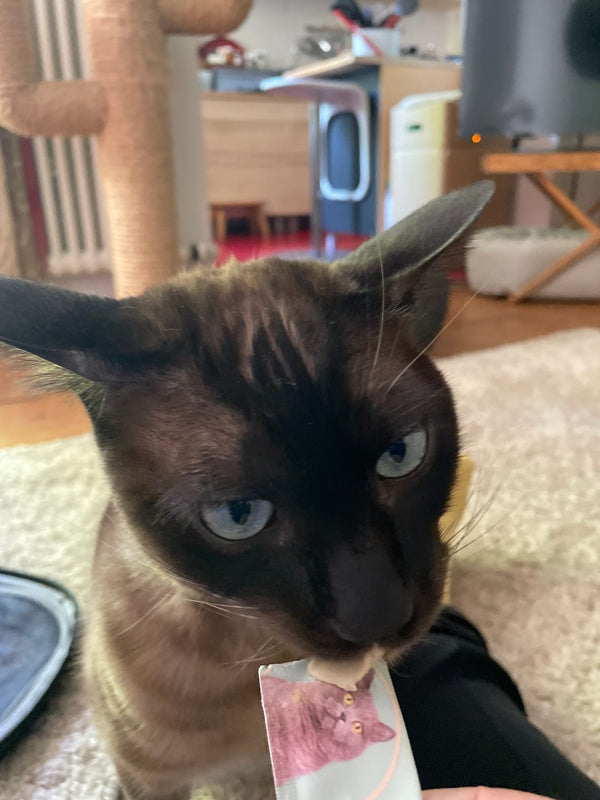
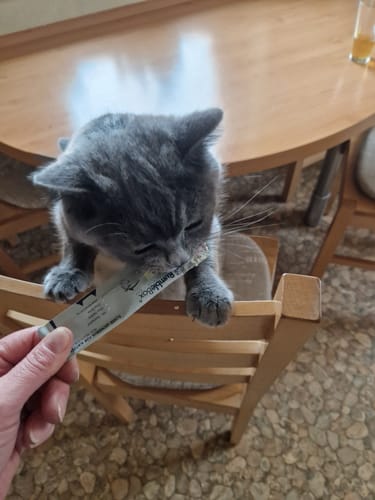
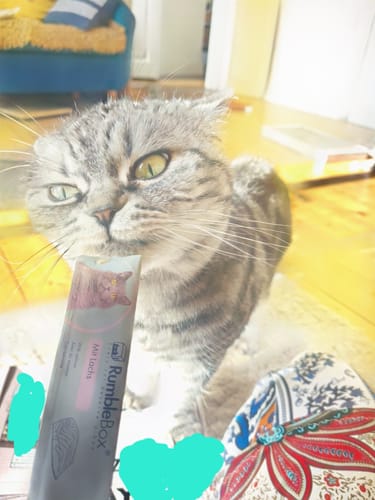
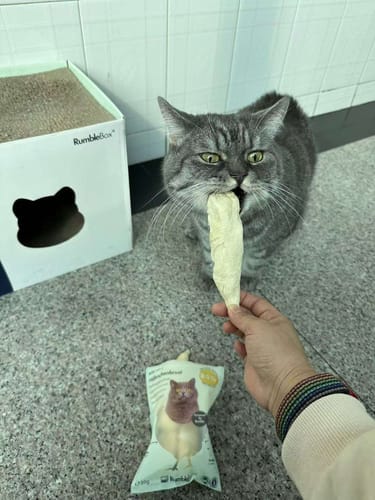
Over 2,500 cats have already switched to healthy snacks!
💚


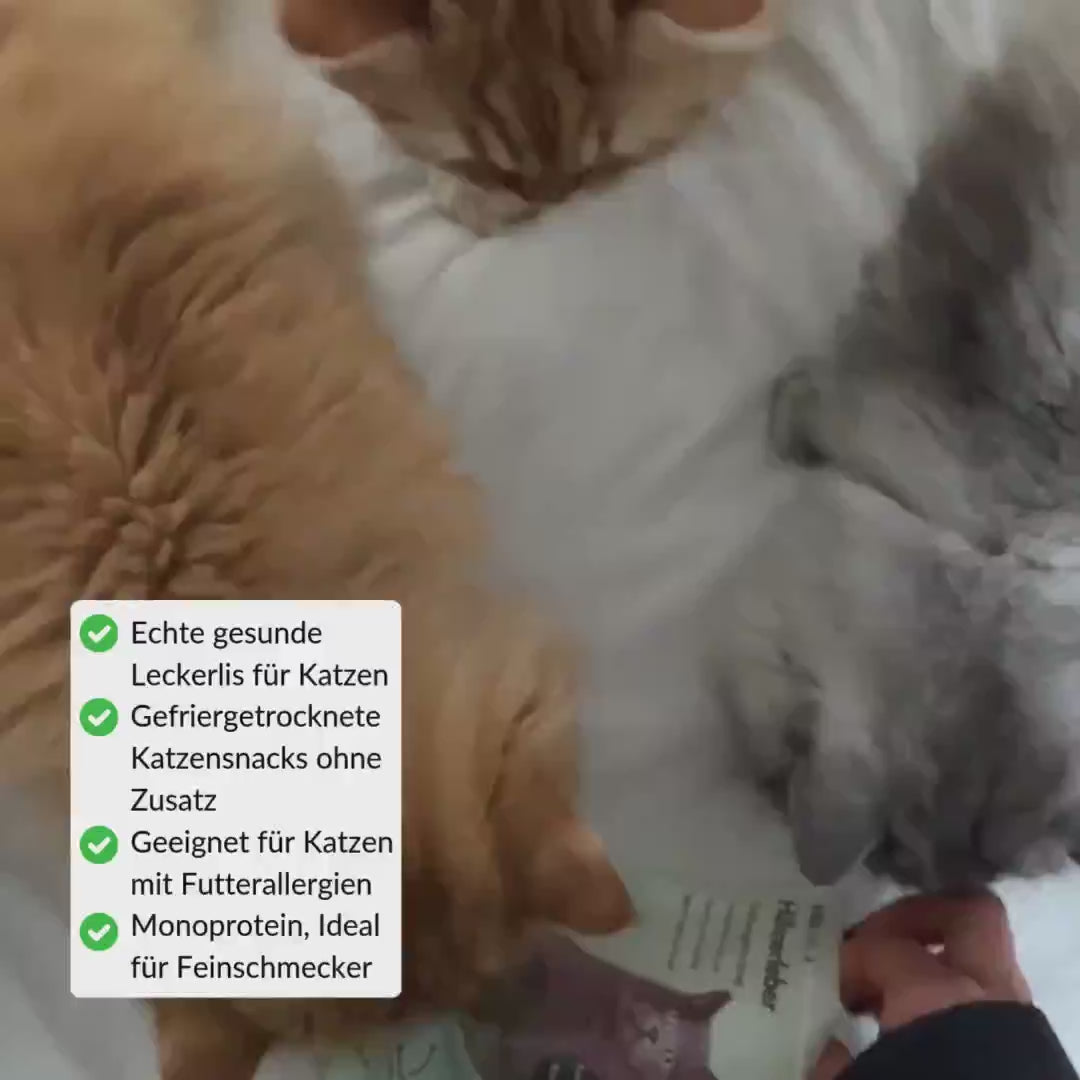


100% Duck Breast Monoprotein 50g
composition
Description
FREEZE-DRIED CAT SNACKS: 100% DUCK BREAST – NATURAL & NUTRITIOUS
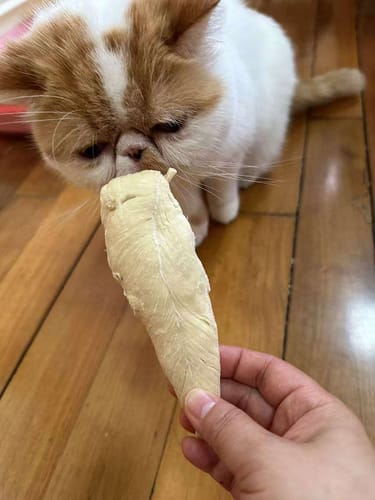
Our freeze-dried cat snacks made from 100% duck breast are the perfect choice for cats who love pure meat snacks. The extra-large pieces are ideal for cats who like to bite hard—at the same time, they encourage their natural chewing instinct and support dental care.
Whether as a daily reward, monoprotein treat for cats or high-quality dried duck breast for cats with special needs – this freeze-dried cat snack stands for species-appropriate nutrition without compromise.
WHY OUR DUCK BREAST SNACKS ARE CONVINCING
- 100% natural : Pure duck breast – no grains, sugar or additives.
- Large pieces for extra enjoyment : Each duck breast is approx. 10 cm long, ideal for enjoyable chewing.
- Fresh meat : Direct from the farm – each 50g pack contains approximately 250g of fresh duck breast.
- Rich in nutrients : High-quality protein and valuable fatty acids for a shiny coat and strong muscles.
- Healthy teeth : The solid pieces promote chewing and support dental care.
- Monoprotein and well tolerated : Unprocessed duck breast for a healthy, species-appropriate diet.
PERFECT FOR ALLERGIC CATS AND SPECIAL NEEDS
Our freeze-dried cat snacks are not only delicious but also extremely well-tolerated. They are ideal as healthy treats for cats or as food for cats with allergies.