Can cats eat rice? Here's what you need to know.
Table of contents
- Key findings at a glance
- Why are cats allowed to eat rice – but only in moderation?
- Is rice okay in processed food?
- When can cats eat rice?
- When should you avoid rice?
- How much rice can cats eat?
- What you should avoid when feeding
- This is how you prepare rice correctly
- Introduction and observation
- FAQ: Frequently Asked Questions
- Conclusion: Can cats eat rice?
- More helpful articles for you
Many cat owners wonder: Can cats eat rice? Especially when cats have diarrhea or stomach problems, you often read that rice can help. But is it really healthy for cats? How much is allowed – and what should you pay attention to?
In this article you will learn:
- When rice is suitable for cats
- What risks exist?
- How much rice you are allowed to feed
- How to prepare it correctly
Key findings at a glance
- Yes, cats can eat rice – but only in small amounts.
- Meat remains a must. Rice is only a supplement, not a replacement.
- Cooked, unseasoned white rice helps with gastrointestinal problems.
- A maximum of two to three times per week – not daily.
- Raw, spiced, or brown rice is not suitable.
- If your pet experiences digestive problems after eating: contact your veterinarian.
Why are cats allowed to eat rice – but only in moderation?
Cats are obligate carnivores, meaning they are true meat-eaters. Their bodies are specialized to utilize animal protein and fat. They require certain nutrients such as:
- Taurine
- Arachidonic acid
- Vitamin A
- Vitamin B12
These substances are only found in animal products. Rice contains none of these substances – but it does provide easily digestible carbohydrates.
Conclusion: Cats don't need rice – but they can digest it in small amounts.
Is rice okay in processed food?
Yes – many high-quality complete dog foods contain rice as a filler. As long as there is enough meat, that's fine.
Explanation: Cats do not need carbohydrates to survive. However, they can use small amounts (such as those found in rice) as an energy source – provided their protein requirements are met.
When can cats eat rice?
Rice is particularly helpful if your cat suffers from digestive problems. It can help soothe the stomach and firm up the stool.
Suitable for:
| situation | Why rice helps |
|---|---|
| Diarrhea or vomiting | It binds liquid and is easily digestible. |
| Sensitive stomach | Hardly irritates the digestive system, gluten-free |
| Bland diet with meat | Combined with chicken, it makes a well-tolerated meal. |
| Ready-made food with rice | As long as it's a complete food containing meat, it's safe. |
Tip: Also read about making your own chicken broth for cats to add more flavor to your cat's bland diet.
When should you avoid rice?
Not every cat tolerates rice equally well.
Avoid rice if:
- Allergies or grain intolerance
- Chronic gastrointestinal diseases
- Diabetes (sugar metabolism can be influenced)
- Exclusive feeding without a protein source
Observe your cat closely after eating – and contact your veterinarian if you have any concerns.
How much rice can cats eat?
The right amount is crucial. Too much rice displaces valuable protein and can lead to deficiencies or weight gain in the long term.
Recommendations:
| cat's weight | Amount of rice per serving |
|---|---|
| 3–4 kg | 1 teaspoon (approx. 5–7 g) |
| 4–6 kg | 1–2 tablespoons (15–20 g) |
- No more than 10% of daily calories from rice
- Always combine rice with meat – e.g., cooked chicken.
- A maximum of two to three times per week
What you should avoid when feeding
These mistakes are common – and dangerous:
| Mistake | Why problematic |
|---|---|
| Excessive quantities | Displaces protein, causes nutrient deficiency |
| uncooked rice | Contains lectins, which can irritate the intestines. |
| Brown rice | Contains more fiber and phytic acid, difficult to digest |
| spices and broth | Onions, garlic, and salt are toxic to cats. |
Brown rice in detail:
Brown rice contains the bran of the grain. This contains more lectins and phytic acid, which can cause bloating, diarrhea, or intolerance in cats.
Onions and garlic:
These destroy red blood cells and lead to anemia (hemolytic anemia). Even small amounts are toxic.
You can find more information in "What shouldn't cats eat? 10 toxic foods".
This is how you prepare rice correctly
Only white rice, well cooked and unseasoned, is suitable for cats.
Step by step:
- Rinse rice with water
- Cook gently in plenty of water without salt or oil until soft.
- Let it cool down
- Mix with cooked meat (e.g. chicken).
- Feed only small portions
Do not use butter, broth, or spices. These are often toxic or unnecessarily burden the stomach.
Introduction and observation
Always introduce new foods slowly:
- Start with half a teaspoon
- Only increase the amount if your cat tolerates it well.
- Watch for vomiting, diarrhea, loss of appetite
When in doubt: always ask the veterinarian
FAQ: Frequently Asked Questions
Can I feed my cat only rice?
No. Rice does not contain essential nutrients for cats and can lead to deficiencies in the long run.
Is brown rice healthier?
Not for cats. It is harder to digest and can upset their intestines.
What can I combine with rice?
The best option: cooked chicken, turkey, or fish. Cooked carrots are also allowed. Never use onions or garlic.
How can I tell if my cat is intolerant to rice?
Typical symptoms include vomiting, diarrhea, flatulence, and loss of appetite.
Conclusion: Can cats eat rice?
Yes – but only rarely, in small quantities and always with meat.
Rice is suitable as a short-term bland diet, especially for stomach problems.
- Not as a main food
- No brown rice, no spices
- Insert slowly and observe the cat.
If you are unsure, talk to your veterinarian.
More helpful articles for you
Explore more
Share this
Popular Articles

Thank you for reading this far – it really means a lot to us! We hope you found something useful and maybe your cat is already looking forward to a little something extra. See you soon and lots of purrs!
By the way
Many cat owners pay close attention to the ingredients in their cat's main food , but often forget about treats .
Snacks often contain sugar, grains and artificial additives that can be harmful to health in the long run.
Anyone who truly wants to feed their cat a completely healthy diet should also rely on natural ingredients here:
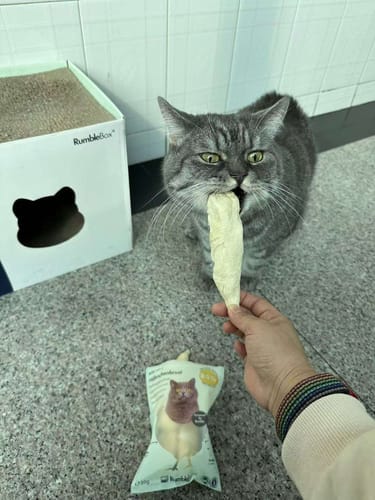
Hypoallergenic treats without additives – naturally from RumbleBox. Perfect as a reward, during training, or simply as a snack.
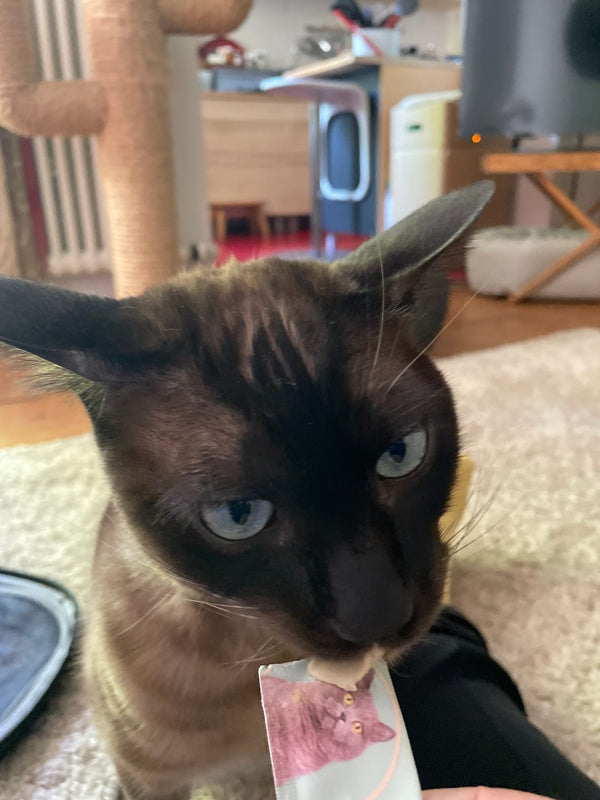
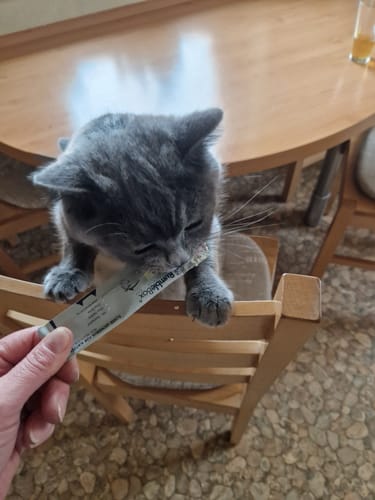
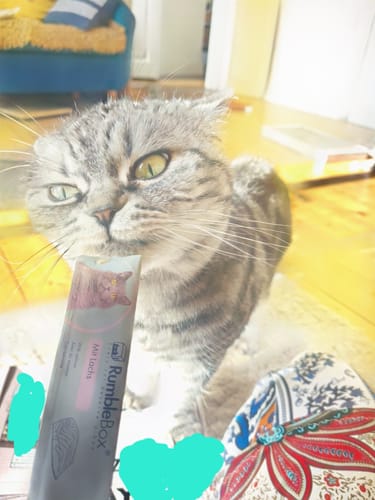
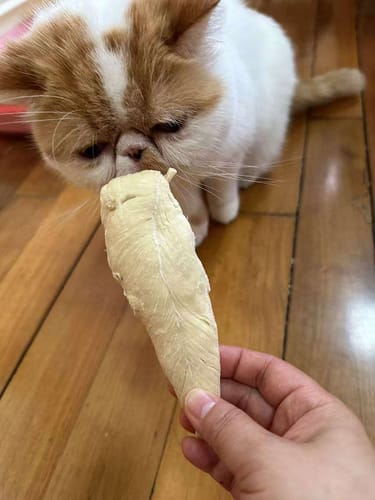
Over 2,500 cats have already switched to healthy snacks!
💚




Schleck & Snack Taster Box for Carnivores
composition
Description
Schleck & Snack Try-Out Box: THE PERFECT START FOR NEW CAT PARENTS
Our Try-Out Box was specially developed for first-time buyers: It contains 3 delicious Schleckies flavors (2 pouches each) as well as 1 pouch of Chicken Breast and 1 pouch of Chicken Cubes as freeze-dried snacks.
This combination brings together our most popular products and covers all important everyday situations – whether as a reward, for training, to help with medication administration, or to boost appetite. Perfect for finding out what your cat truly loves.
WHY THIS TRY-OUT BOX IS PERFECT FOR GETTING STARTED
- Popular bestsellers combined: Schleckies + freeze-dried snacks in one box – ideal for testing different textures and flavors.
- Suitable for all everyday situations: Whether it's a daily reward, training, or a food topping – everything in one box.
- Natural & healthy: No sugar, grains, artificial colors, or preservatives – only high-quality ingredients.
- High acceptance: Perfect for picky cats thanks to the creamy texture and intense meat flavor.
- Ideal for first-time buyers: Get to know our most popular products and find your cat's favorite.
THE PRODUCTS IN DETAIL
1. Schleckies (3 flavors - Chicken, Tuna, Salmon, 2 pouches each) – Creamy indulgence for every day
Our Schleckies consist of a high meat content and are particularly fine and creamy. Enriched with important nutrients like taurine, they support your cat's well-being.
- Premium quality: High-quality meat with up to 70% meat content and over 12% crude protein – for the highest standard in creamy snacks.
- No additives: No sugar, no grains, no binders, no artificial colors or preservatives – only natural ingredients.
- Nutrient-rich: Fresh eggs, fish oil, and taurine promote eyesight, a shiny coat, and a strong immune system.
- Tender texture: A gentle high-speed grinding process (up to 210,000 rpm) creates a particularly fine and creamy consistency.
- Diverse options: Whether chicken, salmon, or tuna – the Ultimate Sparbox offers variety and enjoyment.
2. Freeze-dried Chicken Breast – 100% pure meat
Our chicken breast is gently freeze-dried to preserve nutrients and natural flavor. A high-quality snack for health-conscious cat owners.
- 100% natural: Pure meat without additives
- Rich in protein: Supports muscles and vitality
- Ideal as a reward: Particularly aromatic and popular
- Well-tolerated: Also suitable for sensitive cats
3. Freeze-dried Chicken Cubes – Perfect for Training & Rewards
The small cubes are ideal for frequent, small rewards in everyday life – e.g., during training or for positive reinforcement.
- Practical size: Perfect for training and quick rewards
- Intense flavor: Promotes attention and motivation
- Versatile use: As a snack, topping, or on the go
- Pure recipe: No grains, sugar, or additives
PERFECT FOR THESE EVERYDAY SITUATIONS
- Daily reward: For good behavior or small successes
- Training & education: Playfully supports positive behavior
- Medication administration: Less stress through tasty distraction
- Appetite stimulation: Ideal for picky cats or when they have little hunger
- Strengthening the bond: More shared moments with your cat