Making your own cat food: 19 frequently asked questions and answers
Do you want to finally serve your beloved house cat something fresh and healthy instead of just ready-made canned food?
Then you've come to the right place!
Many cat owners would like to switch to home-cooked cat food – but questions often arise:
-
Which ingredients are allowed?
-
How do I ensure I get all the important nutrients?
-
When can I start introducing a kitten to home-cooked food?
In this article you will receive understandable answers and practical tips so that you can feed your cat a safe and balanced diet.
1. When can a kitten eat homemade food?
A kitten can be slowly introduced to homemade food starting at 2–3 months of age . A gentle transition is important so that the gastrointestinal tract can become accustomed to the new food.
✅ Cut meat very finely – young cats cannot chew large pieces well.
✅ Start with small amounts – first as a side dish to the usual food.
✅ Increase slowly – after a few days, increase the proportion of home-cooked meals.
2. Should the weight of the ingredients be calculated raw or cooked?
The feed quantity is calculated based on the raw weight . During steaming, the meat loses water, so it may appear lighter after cooking.
🔗 More on this: 👉 Amount of food for cats: How much food does your cat need?
A quick tip: If you want to increase your cat's drinking volume , you can add a little water during cooking. The resulting broth contains nutrients and can be fed.
3. Is the ratio the same for cooked and raw food?
Almost, but there are some differences:
✔ Liver loses nutrients when heated → Increase the proportion from 5% to 7–8% .
✔ Cooked bones become brittle → They can injure the gastrointestinal tract. Better: calcium supplements or fine bone meal.
✔ Cooked broth contains valuable nutrients → It can be fed.
4. Which cooking method is best?
The most gentle method is steaming , which preserves most of the nutrients.
-
Steam cooking: 10–15 minutes, depending on the size of the meat pieces.
-
Not recommended:
-
❌ Boiling water – many nutrients pass into the cooking water.
-
❌ Microwave – can heat the meat unevenly.
Tip: Place the meat in a steamer, add some water to the pot, and cook it gently. This will keep it moist and nutrient-rich.
5. Which ingredients are suitable for cats?
Not all foods that are healthy for humans are also suitable for cats. Here's an overview:
Suitable foods
✔ Muscle meat (chicken, turkey, beef, duck, rabbit)
✔ Offal (liver, heart, kidney – in moderation)
✔ Fish (cooked, boneless)
✔ Eggs (boiled)
✔ Broth without spices
Unsuitable foods
❌ Onions & garlic – highly toxic!
❌ Chocolate & coffee – contain theobromine, which is fatal to cats.
❌ Milk – many cats are lactose intolerant.
❌ Salt, sugar, spices – harmful to the kidneys.
❌ Bones – only suitable in raw or very finely ground form.
🔗 Read more: 👉 "What shouldn't cats eat? 10 toxic foods"
6. Does meat need to be washed before cooking?
It depends on the origin:
✔ Fresh, loose meat from the market → Rinse it briefly to remove impurities.
✔ Packaged meat from the supermarket → No need to wash, can be cooked directly.
❌ Do not wash frozen meat before freezing! Moisture promotes bacterial growth.
7. How should fish be fed?
Raw fish poses risks. It can contain parasites, bacteria, and thiaminase, which breaks down vitamin B1. Therefore, you should always cook fish thoroughly for cats.
Suitable fish varieties in Germany
-
Salmon
-
trout
-
cod
-
pollock
-
mackerel
-
herring
-
tuna
Important preparation tips
-
Boil or steam the fish.
-
No spices or additives like onions.
-
Carefully remove bones .
Quantity and frequency
-
Once or twice a week is usually enough.
-
Replace only part of the daily ration with fish.
-
Monitor your cat's weight.
8. When should supplements be added?
Supplements such as calcium, taurine or vitamins should be added after cooking to avoid nutrient loss.
-
Calcium : Can be mixed into the food daily.
-
Fish oil, vitamin E : Not necessary every day, can be given as needed.
-
Vitamin B : Has a bitter taste. Some cats tolerate it better when mixed with a treat or some wet food.
9. Can I pre-cook and freeze larger quantities?
Yes, this is a great way to save time!
✔ Freeze in portions.
✔ Thaw in the refrigerator the day before.
✔ Warm slightly before feeding.
❌ Do not freeze and thaw repeatedly – this destroys nutrients and increases the risk of spoilage.
10. Will my cat drink too little water after the change?
No, that's perfectly normal. Homemade food contains about 75% water , while dry food contains only 10% water .
Since cats absorb fluids mainly through their food, they often drink less from the bowl when they are given homemade food.
11. Does my cat need additional taurine?
Yes, cats cannot produce taurine themselves. It is abundant in chicken hearts and liver . If you feed your cat a limited amount of organ meats, you should supplement with a taurine supplement.
🔗 Read more about it here: 👉 “Taurine for Cats: Why it's so important”
12. Can cats eat eggs?
Yes, but only cooked!
-
Raw egg whites contain avidin , which can block the absorption of biotin (vitamin B7).
-
Cooked egg yolk, on the other hand, is a good source of nutrients.
13. What should I do if my cat doesn't eat liver?
Liver is an important source of nutrients. If your cat doesn't like it, you can:
✔ Mix or puree with wet food.
✔ Offer in the form of liver powder or freeze-dried liver.
✔ Try different varieties (e.g. chicken, duck, beef).
If she doesn't eat liver at all, a suitable vitamin supplement can help.
14. Can homemade food cause pancreatitis?
Not directly. Pancreatitis is often caused by obesity or food that is too high in fat . Home-cooked food with lean meat and balanced amounts of fat is safe.
15. Is it normal for stools to decrease after the transition?
Yes, that's actually a good sign! Cats digest meat more than 95% effectively . Feces and a reduced odor are normal reactions to high-quality food.
16. Do cats need to eat fruits and vegetables?
Cats are obligate carnivores, meaning they eat only meat. While fruits and vegetables provide vitamins and fiber, they can also contain too many indigestible components or carbohydrates, which can lead to digestive problems.
-
If you still want to try it, please only use tiny amounts and observe whether your cat tolerates it well.
-
Normally, cats do not need significant amounts of plant-based ingredients to stay healthy.
17. What should I do if my cat is picky? Is one type of meat enough?
Even though some cats only like "their" favorite meat, it's recommended to feed several types of meat . Each meat source (chicken, turkey, beef, rabbit, etc.) contains slightly different nutrients. Tips for picky cats:
✅ Introduce new varieties slowly:
-
Mix small amounts into the usual food.
-
Gradually increase the amount.
✅ Make food more attractive:
-
Heat slightly to make the fragrance more intense.
-
A small amount of freeze-dried topping on top can further enhance the smell.
18. Dry food “at your disposal” during the day, home-cooked food in the evening – is that okay?
Many work and seek a compromise between ready-made food and home-cooked food. It's possible in principle, but :
-
Watch the calories : Dry food is very energy-dense. Free access to it throughout the day can easily lead to obesity.
-
Instead, try providing a limited amount of dry food or using an automatic feeder that dispenses small portions. Then, in the evening, give your cat a home-cooked portion.
-
Don't forget to provide plenty of fresh water , as dry food contains little moisture.
19. Fish oil or vitamin E supplements lead to soft stools – what to do?
Fish oil and vitamin E are generally beneficial for your cat's skin, coat, and general health. However, if diarrhea or soft stools occur:
-
First, reduce the dose or give the medication only every two to three days.
-
Pay attention to quality and freshness – rancid oil can further irritate the gastrointestinal tract.
-
If problems persist, talk to your veterinarian about possible alternatives.
Conclusion
Homemade cat food can be a healthy and natural alternative to ready-made food—but only if done correctly. With these answers, you'll be well prepared.


Thank you for reading this far – it really means a lot to us! We hope you found something useful and maybe your cat is already looking forward to a little something extra. See you soon and lots of purrs!
By the way
Many cat owners pay close attention to the ingredients in their cat's main food , but often forget about treats .
Snacks often contain sugar, grains and artificial additives that can be harmful to health in the long run.
Anyone who truly wants to feed their cat a completely healthy diet should also rely on natural ingredients here:
Hypoallergenic treats without additives – naturally from RumbleBox. Perfect as a reward, during training, or simply as a snack.
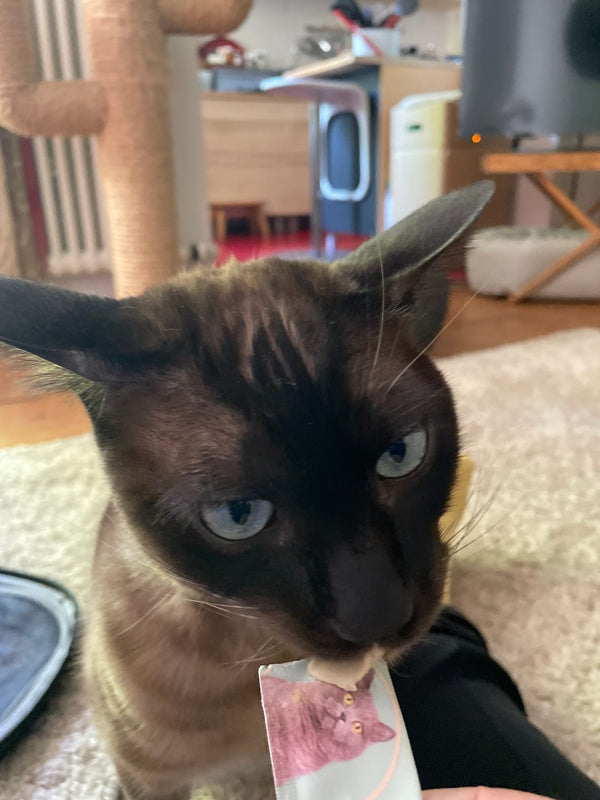
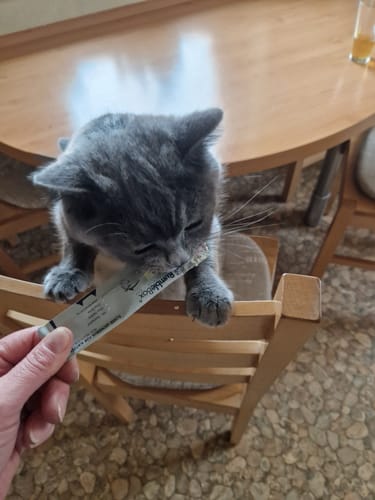
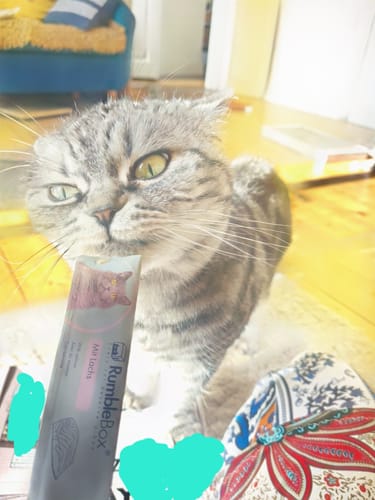
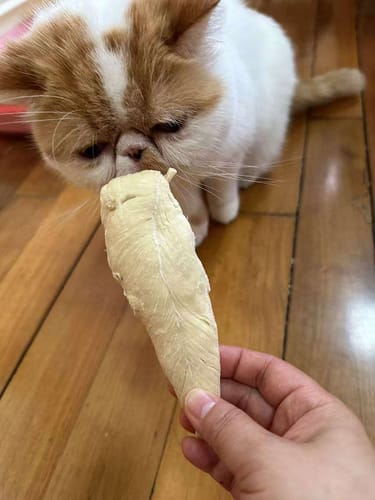
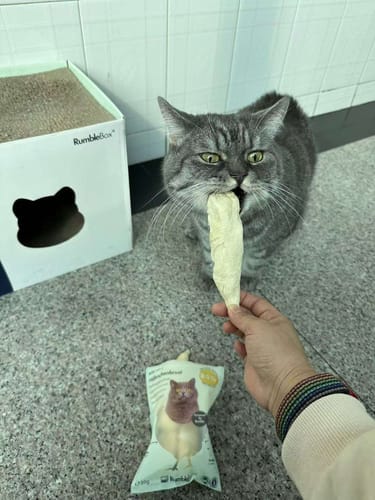
Over 2,500 cats have already switched to healthy snacks!
💚


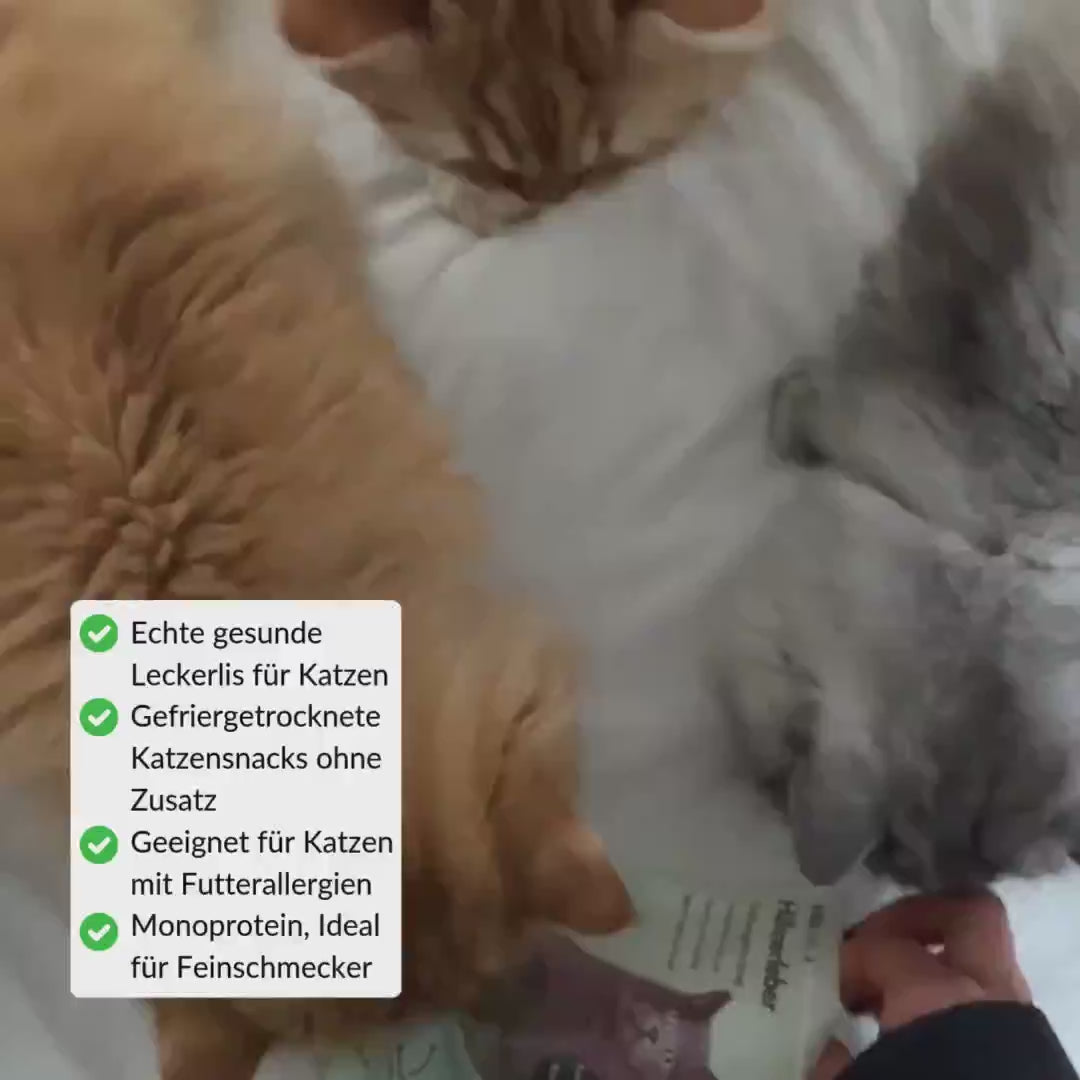


100% Duck Breast Monoprotein 50g
composition
Description
FREEZE-DRIED CAT SNACKS: 100% DUCK BREAST – NATURAL & NUTRITIOUS
Our freeze-dried cat snacks made from 100% duck breast are the perfect choice for cats who love pure meat snacks. The extra-large pieces are ideal for cats who like to bite hard—at the same time, they encourage their natural chewing instinct and support dental care.
Whether as a daily reward, monoprotein treat for cats or high-quality dried duck breast for cats with special needs – this freeze-dried cat snack stands for species-appropriate nutrition without compromise.
WHY OUR DUCK BREAST SNACKS ARE CONVINCING
- 100% natural : Pure duck breast – no grains, sugar or additives.
- Large pieces for extra enjoyment : Each duck breast is approx. 10 cm long, ideal for enjoyable chewing.
- Fresh meat : Direct from the farm – each 50g pack contains approximately 250g of fresh duck breast.
- Rich in nutrients : High-quality protein and valuable fatty acids for a shiny coat and strong muscles.
- Healthy teeth : The solid pieces promote chewing and support dental care.
- Monoprotein and well tolerated : Unprocessed duck breast for a healthy, species-appropriate diet.
PERFECT FOR ALLERGIC CATS AND SPECIAL NEEDS
Our freeze-dried cat snacks are not only delicious but also extremely well-tolerated. They are ideal as healthy treats for cats or as food for cats with allergies.