Can cats get the hiccups? Causes, help & when you should see a vet
The question sounds almost like veterinarian small talk in a waiting room – and yet, hundreds of people type it into Google every month: Can cats get the hiccups? Usually, a small moment of shock lies behind it. The cat is sitting there, the belly is twitching rhythmically, maybe it makes a quiet sound – and suddenly you are not sure whether it is cute or worrying. I am writing this post because I have observed exactly this in our own cats over the last few years and in countless messages from owners. And the short answer can come right up front.
Can cats get the hiccups? The short answer first
Yes. Cats can have hiccups – and it is completely normal. It is the same reflex that we humans know, only it is often much less noticeable in cats. In veterinary terms, the phenomenon is called singultus: an involuntary, jerky contraction of the diaphragm that repeats at short intervals.
The catch: With many cats, you don't even notice the hiccups. Unlike in humans, where there is a distinct "hic," in cats it often remains silent. You only see a slight, rhythmic twitching in the belly or the flanks – sometimes a barely audible click or a tiny burp. That is exactly why it is often only noticed when the cat is lying relaxed on your lap and you can feel the movement directly. There is a reason why the topic is so elusive: hiccups in cats are simply rarely dramatic – and therefore rarely a reason to take a closer look.
What are hiccups in cats actually? – The physical basics
To understand whether cats can have hiccups, it is worth looking at the mechanics behind it. The diaphragm is the large, dome-shaped breathing muscle between the chest and abdominal cavity. During hiccups, it contracts suddenly and uncontrollably, the cat takes a jerky breath – and at the same moment the glottis closes. The incoming air hits this closure. In humans, this creates the typical "hiccup." In cats, the glottis is often not closed quite as abruptly, which is why the sound is quieter or not present at all.
The role of the phrenic nerve
The pacemaker for this twitching is provided by a single nerve: the phrenic nerve (nervus phrenicus). It runs from the neck area through the chest to the diaphragm. If it is irritated – for example, by a gas-filled stomach pressing against the diaphragm from below – it fires, and the muscle twitches. The Birgit Dumhart veterinary practice describes this mechanism for puppies and young animals very vividly: the singultus arises "from an irritation of the phrenic nerve," which runs "from the neck through the chest to the diaphragm" (Tierarztpraxis Dumhart). The same anatomical basis applies to cats.
Honestly: anyone expecting scientific studies specifically on cat hiccups here will be disappointed. Hiccups in cats are hardly researched. There are no large-scale investigations, no statistics on frequency, no controlled experiments. Most of what reputable sources write is based on veterinary experience and observations from owners. That is no reason to panic – but it is a reason to be skeptical of any number sold somewhere on the net as a "fact."
Hiccups, coughing, or gagging? – The big difference at a glance
This is where it becomes practically important. Because the most common mistake is to confuse hiccups with something else – and that is exactly what determines whether you can stay relaxed or should go to the vet.
Hiccups feel rhythmic and regular. An even twitching that stops on its own after a few minutes. The cat usually appears completely unimpressed – it does not look panicked, does not gag, does not change its posture. Coughing, on the other hand, comes in bursts, often with a stretched neck and a crouched body. Gagging, in turn, is the typical precursor to a hairball: the cat makes a pulling, "milking" movement with its entire upper body, the neck stretches forward, and at the end – sometimes – something comes out.
| Feature | Hiccups (Singultus) | Coughing | Gagging | Coughing up hairballs |
|---|---|---|---|---|
| Rhythm | regular, rhythmic | bursts, irregular | spasmodic, pulling | wavelike, "milking" |
| Sound | quiet or none at all | dry, rattling | gagging, throaty | loud gagging before ejection |
| Posture | relaxed, normal | neck stretched, crouched | head lowered, neck long | head low, body stretched |
| Result | nothing comes out | nothing or some mucus | possibly saliva/foam | hairballs or food scraps |
| Duration | seconds to a few minutes | in fits | short, multiple times | short, with ejection at the end |
My simplest test in everyday life: if the cat just continues as if nothing happened after the incident, it was most likely hiccups. If it keeps stretching its neck and seems to want to "get rid" of something, it's more likely coughing or gagging – and I observe that more closely.
Harmless causes for hiccups in cats
In the vast majority of cases, hiccups in cats are trivial. The triggers are surprisingly common.
Eating too fast and swallowing air. This is the classic, and in my observation by far the most common. A cat that empties its bowl in twenty seconds swallows plenty of air in the process. This air collects in the stomach, presses against the diaphragm from below – and irritates the phrenic nerve. This very connection between hurried eating, air in the stomach, and hiccups is also described by veterinarians (Tierarztpraxis Dumhart).
Hairballs (bezoars). Cats are constantly swallowing hair while grooming. According to the veterinary team at Dr. Hölter, an average 4 kg short-haired cat ingests about 75 g of hair per year in this way (Dr. Hölter). If a larger amount of this collects in the stomach, the resulting hairball can irritate the diaphragm and thus trigger hiccups.
Stress, excitement, and cold air. Rapid, uncontrolled breathing during wild play can bring air into the stomach just as much as pure excitement. And a sudden cold stimulus – the cat is sitting at an open window, a cold draft comes in – can also trigger muscle contractions.
Dehydration and an irritated stomach. Cats naturally drink little. A slightly irritated, almost empty stomach or a lack of fluids can increase sensitivity.
RumbleBox tip: What many underestimate – the composition of the snack plays a bigger role for the stomach than one might think. Highly processed treats with grain, sugar, and binding agents sit heavily and can additionally burden a sensitive stomach. We deliberately build our snacks the other way around: easily digestible, high-quality meat, no grain, no sugar. An unburdened stomach produces less fermentation gas – and less gas means less pressure from below against the diaphragm. Direct proof is missing, but the logical lever is right there.
Hiccups in kittens: Why young cats are affected more often
Anyone who has a kitten knows the spectacle particularly well. Young cats have hiccups much more often than adults – and there are solid reasons for this. Kittens eat more greedily, play wilder, and swallow more air in the process. In very young animals, hiccups also act as a kind of protective reflex: while nursing from the mother (and later while eating hurriedly), a lot of air gets into the stomach, and the "hiccuping" helps to prevent excess gas. The veterinary practice Dumhart describes exactly this protective mechanism in puppies, and the principle can be applied to kittens (Tierarztpraxis Dumhart).
Myth check: Are hiccups a "sign of growth"?
You often read this claim – and it is cute, but not proven. There is no study linking hiccups in cats to growth spurts. What is true: as they get older, hiccups become less frequent. But this is not due to a mysterious "growth signal," but simply because adult cats eat more calmly, swallow less air, and breathe in a more controlled manner overall. "Outgrowing it" is accurate – just mechanically, not magically.
Hiccups across breeds and life stages – is there a pattern?
I have not encountered a clear breed-typical pattern anywhere serious – here too, research is simply lacking. What can be described is more of a pattern across life stages. In kittens, hiccups are frequent and almost always harmless. In adult cats, they become rare and are usually associated with a specific trigger – eating too fast, a hairball, a cold draft.
What you should pay special attention to in older cats
With senior cats, I deliberately reverse the assessment. If an older cat that has never had hiccups for years suddenly twitches regularly, it is no longer a case of "outgrowing it." It is precisely in this life stage that more serious causes of irritation gain importance – tumors or inflammation that irritate the phrenic nerve play a greater role, especially in older animals, according to veterinary descriptions (Tierarztpraxis Dumhart). For a senior cat, therefore: better to have it checked out once too often than too little.
When hiccups can be a warning sign – illness-related causes
Now for the more serious part. Because as harmless as hiccups are in 95% of cases – there are situations where what looks like hiccups is something else or there is an illness behind it.
Asthma and respiratory diseases. Cats can develop asthma. The seizure-like breathing movements are sometimes misinterpreted by owners as "hiccups." Anyone who sees a crouched body, stretched neck, and whistling or rattling breathing should not think of hiccups, but of the airways.
Heart disease. Here too: what twitches rhythmically does not have to be the diaphragm. Altered breathing at rest, rapid exhaustion, or pale mucous membranes should be investigated quickly.
Allergies and intolerances. If a cat reacts sensitively to certain food components, an irritated digestive tract can also irritate the diaphragm. Not every cat tolerates everything – and that often remains unnoticed for a long time.
Parasites and foreign bodies. Lungworms or an swallowed foreign body can trigger coughing and gagging-like movements that are confused with hiccups.
The principle I stick to: a single, short hiccup is part of everyday life. Frequent, persistent hiccups or those accompanied by other symptoms belong in veterinary hands – not in internet self-study.
What you can do – How to help your cat with hiccups
In an acute situation, there is usually the least to do – and that is exactly the point.
Stay calm and observe. Sit with them, watch, count in your head how long it takes. Most episodes are over after seconds to one or two minutes. Firm, calm stroking of the chest can calm the breathing.
Encourage slower eating. This is the biggest lever. An anti-gulp bowl, smaller portions distributed throughout the day, and calm snack moments without competition from other animals noticeably reduce air swallowing. Several small meals instead of one large one are also more favorable from a digestive point of view.
Regular grooming against hairballs. Brushing removes loose hair before the cat swallows it. Especially during shedding and for long-haired cats, this is the most effective prevention – and the veterinary team at Dr. Hölter also names regular brushing as one of the first measures against hairballs (Dr. Hölter).
Ensure sufficient fluids. Fresh water in several places, a drinking fountain, or moisture-rich snacks help cats that naturally drink too little.
What you should definitely not do
Do not startle the cat. In humans, the tip circulates that you can "scare away" hiccups. With cats, this is nonsense and simply unfair. A frightened animal is more likely to swallow even more air out of fright – and incidentally loses trust.
Do not use home remedies for humans. No pepper, no lemon juice, no water-against-the-direction-of-breathing trick, no human medication. What is harmless to us can be burdensome or toxic to a cat. In case of doubt: do not give anything and observe.
When you should go to the vet with your cat – the checklist
These are the points where I would make an appointment:
- The hiccups last an unusually long time (over about half an hour at a time) or occur several times a day over several days.
- Accompanying symptoms are added: coughing, gagging, frequent vomiting, loss of appetite, weight loss, abdominal pain.
- The breathing appears changed – whistling, rattling, labored, fast at rest.
- The cat appears generally dull, withdraws, or eats poorly.
- It is an older cat that suddenly develops new hiccups.
With senior cats, I deliberately lower this threshold. Better to have it checked out once too often – the more serious causes of irritation on the phrenic nerve occur more frequently in old age.
Frequently Asked Questions (FAQ) about hiccups in cats
Can cats really get the hiccups?
Yes. It is the same reflex as in humans – an involuntary twitching of the diaphragm, triggered via the phrenic nerve. In cats, it just often runs quieter and more unobtrusively.
How long do hiccups in cats usually last?
Usually only seconds to a few minutes. There are no reliable study numbers specifically for cats – the phenomenon has hardly been scientifically researched. If an episode lasts significantly longer, that is a reason to take a closer look.
Are hiccups in cats dangerous?
As a rule, no. What is dangerous is not the hiccups themselves, but what you might confuse them with – coughing, breathing difficulties, gagging with other symptoms. Frequent or persistent hiccups with accompanying symptoms should be clarified by a veterinarian.
Can the right food prevent hiccups?
There is no guarantee, but the most common trigger – swallowing air while eating hurriedly – can be influenced by feeding routine and easily digestible, stomach-friendly snacks. Smaller portions, calm snack moments, and snacks without grain and sugar unburden the stomach.
Conclusion: Hiccups in cats – usually harmless, but good to observe
Can cats get the hiccups? Yes, and in the vast majority of cases, it is nothing to worry about. The reflex arises via the phrenic nerve, is most commonly triggered by swallowing air while eating hurriedly, is particularly common in kittens, and usually disappears on its own with age. You only become vigilant if it occurs frequently, lasts a long time, is accompanied by other symptoms, or appears new in an older cat.
What you really have control over in everyday life is nutrition. A calmly eating animal with a well-digested stomach swallows less air and produces less fermentation gas – both of which are exactly the irritants that disturb the diaphragm. This is exactly where we come in: natural RumbleBox snacks made from 100% meat, without grain, without sugar, without unnecessary additives – a gentle, well-tolerated choice, also ideal for sensitive cat stomachs. Anyone looking for a gentle entry point should try our Schleck & Snack sampler box or the RumbleBox monoprotein snacks (freeze-dried, grain & sugar-free). Less in the bowl, more for well-being – and a more relaxed belly to boot.


Thank you for reading this far – it really means a lot to us! We hope you found something useful and maybe your cat is already looking forward to a little something extra. See you soon and lots of purrs!
By the way
Many cat owners pay close attention to the ingredients in their cat's main food , but often forget about treats .
Snacks often contain sugar, grains and artificial additives that can be harmful to health in the long run.
Anyone who truly wants to feed their cat a completely healthy diet should also rely on natural ingredients here:
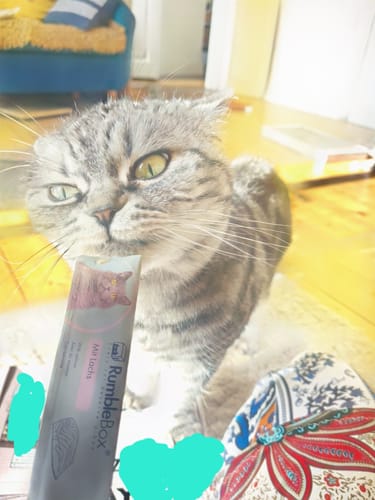
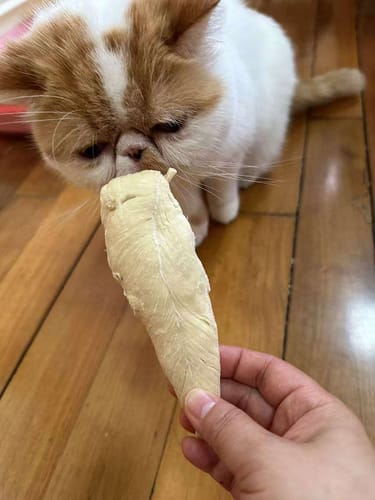
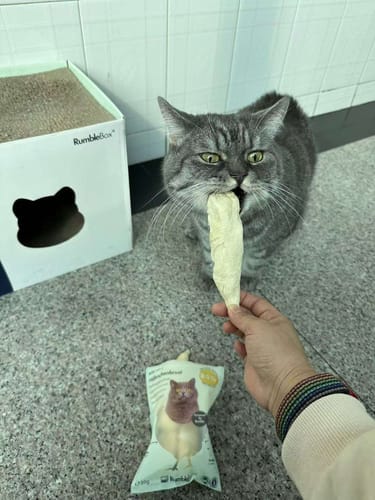
Hypoallergenic treats without additives – naturally from RumbleBox. Perfect as a reward, during training, or simply as a snack.
Over 2,500 cats have already switched to healthy snacks!
💚


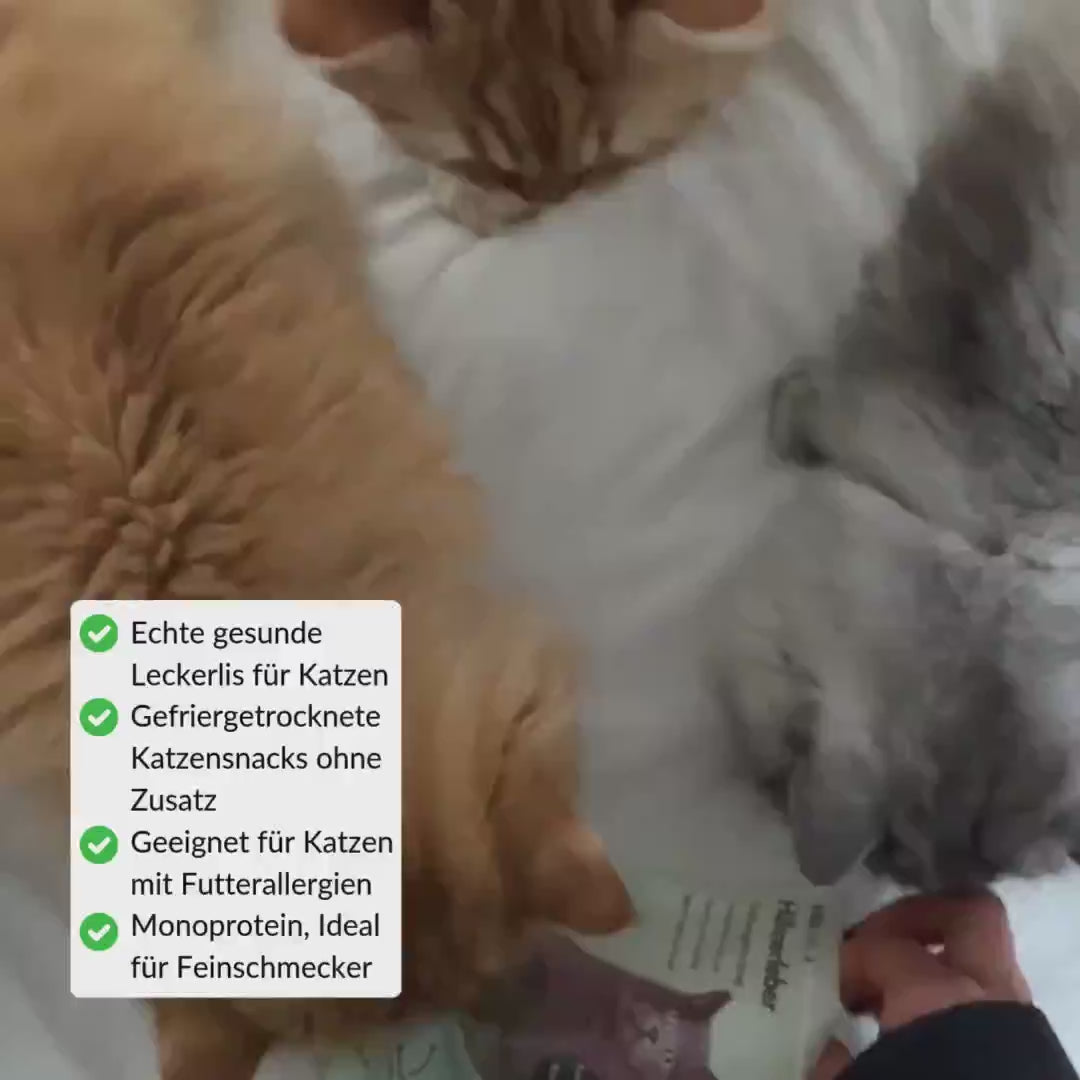


100% Duck Breast Monoprotein 50g
Description
FREEZE-DRIED CAT SNACKS: 100% DUCK BREAST – NATURAL & NUTRITIOUS
Our freeze-dried cat snacks made from 100% duck breast are the perfect choice for cats who love pure meat snacks. The extra-large pieces are ideal for cats who like to bite hard—at the same time, they encourage their natural chewing instinct and support dental care.
Whether as a daily reward, monoprotein treat for cats or high-quality dried duck breast for cats with special needs – this freeze-dried cat snack stands for species-appropriate nutrition without compromise.
WHY OUR DUCK BREAST SNACKS ARE CONVINCING
- 100% natural : Pure duck breast – no grains, sugar or additives.
- Large pieces for extra enjoyment : Each duck breast is approx. 10 cm long, ideal for enjoyable chewing.
- Fresh meat : Direct from the farm – each 50g pack contains approximately 250g of fresh duck breast.
- Rich in nutrients : High-quality protein and valuable fatty acids for a shiny coat and strong muscles.
- Healthy teeth : The solid pieces promote chewing and support dental care.
- Monoprotein and well tolerated : Unprocessed duck breast for a healthy, species-appropriate diet.
PERFECT FOR ALLERGIC CATS AND SPECIAL NEEDS
Our freeze-dried cat snacks are not only delicious but also extremely well-tolerated. They are ideal as healthy treats for cats or as food for cats with allergies.