Cats with short legs – The Munchkin & Co. breed portrait
What’s behind cats with short legs?
There is that one moment everyone knows if they have ever stumbled across a Munchkin while scrolling: You pause for a second, grin involuntarily, and think, "Wait a minute, is something wrong here?" Exactly this mix of cuteness and irritation is the reason why cats with short legs have been haunting the web for years. I dug into the topic – and the deeper you dig, the less cute the whole thing becomes.
In short: an optical effect based on a genetic mutation. The legs appear stunted, while the body remains a normal length – and just like that, you have a "sausage cat." Fascinating to some, highly problematic to others. Animal welfare activists, veterinarians, and breeding associations are having a pretty heated debate about these animals, and to be honest: rightly so.
Anyone looking for cats with short legs usually lands quickly on four names:
- Munchkin – the original breed with short legs, where the whole trend began.
- Minskin – Munchkin crossed with hairless cat genetics, i.e., short legs plus hardly any fur.
- Bambino – Sphynx meets Munchkin: hairless and short-legged at the same time.
- Kinkalow – short legs combined with the curled ears of the American Curl.
They all share the Munchkin basis. So, if you want to understand the leg gene, you have to start with her.
The Munchkin cat: Profile of the "sausage cat"
Origin and history
The history is surprisingly young. In the early 1980s, a teacher in the U.S. state of Louisiana found a pregnant, short-legged stray – and she passed the trait on to her kittens. From this one cat, the entire breed was created. In 1991, the Munchkin was presented to a wider public for the first time, and in 1995, the American association TICA officially recognized it. Other major associations consciously did not – the dispute over the leg was part of the breed's history from the beginning.
By the way, the nickname "sausage cat" (or "dachshund cat") wasn't given by marketing. Animal welfare organizations like FOUR PAWS use it quite soberly to describe what has happened here in terms of breeding.
Appearance, size, and weight
From the neck up, the Munchkin is a completely normal house cat: medium-sized head, alert eyes, the full spectrum of fur colors and lengths. The difference lies in the legs. They are significantly shortened, especially the front legs, so the animal stands lower to the ground. In terms of weight, a Munchkin falls within the range of an average house cat – the short legs do not make them lighter, and that will become important later.
Character and temperament
This is where it gets likable: Munchkins are considered playful, curious, affectionate, and not at all moody. Owners often report that their animals sit upright on their hind legs like little meerkats to examine their surroundings. Temperament is not the problem with this breed. The problem is in the skeleton.
Why are the legs so short? The genetics – without the technical jargon
The cause is a mutation that veterinarians call chondrodysplasia, also known as "disproportionate dwarfism." The mutation mainly affects the cartilage tissue and causes the long tubular bones in the legs not to grow out properly. The rest of the body continues to develop normally – hence the stunted proportions. FOUR PAWS describes it dryly: shortened legs, often accompanied by herniated discs, osteoarthritis, and bone and joint deformities.
Important to know: The trait originally appeared spontaneously, meaning it wasn't invented by humans. But – and this is the crux of the matter – since the 1990s, it has been bred intentionally. A quirk of nature became a business model. And the gene has a dark side: If you mate two short-legged animals with each other, the embryos are not viable and usually die in the womb. This is not a rare complication, but rather built into the genetics of the breed.
Anyone who wants to know more can find the veterinary medical classification in the QUEN fact sheet on feline disproportionate dwarfism – the animal welfare database works with veterinary authorities and universities; this is not just pub talk.
Facts and figures: How popular are short-legged cats really?
Without social media, this hype simply wouldn't exist. Munchkins have become an internet phenomenon in format form: short clips in which a small cat waddles across a parquet floor reliably garner reach. On TikTok and Instagram, these animals circulate under hashtags like #munchkincat by the millions – the moving-image aesthetics of the platforms reward exactly what the Munchkin unintentionally provides: an instantly recognizable, "different" body.
I am deliberately not mentioning an exact follower count here, because these values shift daily and can hardly be verified reliably. However, what can be proven is the direction: The trend toward extraordinarily looking cats is real, and animal welfare organizations see it as a driver for the demand for "torture breeds" (Qualzuchten). FOUR PAWS clearly classifies the Munchkin in its overview of breeding for defects in cats as a problematic breed – and not as a cute special case.
Health of short-legged cats: Risks and animal welfare debate
Typical complaints
This is where the fun ends. The shortened legs are not "just" cosmetic; they shift the entire statics of the body. Frequently documented issues include:
- Lordosis – an excessive curvature of the spine, which in severe cases presses on internal organs.
- Osteoarthritis – due to incorrect joint loading, often at a young age.
- Herniated discs – a direct consequence of the disproportionate skeletal development.
FOUR PAWS puts it unequivocally: Affected animals have "great difficulty performing their natural behavior such as jumping and running" and suffer from pain due to bone and joint deformities, especially from osteoarthritis and herniated discs. To make matters worse, the Munchkin is also included in animal welfare literature among brachycephalic (short-nosed) breeds – depending on the bloodline, breathing problems can be added to the mix.
Movement restrictions in everyday life
A healthy cat easily jumps six to eight times its body length. They need that – not to show off, but because climbing, jumping, and seeking elevated spots are core to their nature. A short-legged cat reaches its limits there. The sofa, the windowsill, the favorite spot on top of the cabinet: suddenly, everything is a small expedition. Anyone watching a Munchkin take repeated attempts will see pretty quickly that "cute" and "restricted" describe the same animal here.
Torture breeding discussion and legal situation
In Germany, § 11b of the Animal Welfare Act applies – the so-called ban on breeding for defects (Qualzuchtverbot). It prohibits the breeding of vertebrates if, due to hereditary factors, body parts are missing or modified in such a way that pain, suffering, or damage occurs. The discussion about the Munchkin falls exactly into this definition. Several animal welfare organizations and veterinary reports classify the breed as a "torture breed." Still, the animals are sold and kept – the gap between clear legislation and enforced practice is a recurring topic all over Europe.
My personal assessment after researching: Anyone who wants to "save" a Munchkin by buying it is actually financing the next litter. That is uncomfortable, but that's how demand works. More on this at FOUR PAWS on torture breeding in cats.
Appropriate husbandry and care: How to support your short-legged furball
A barrier-free home
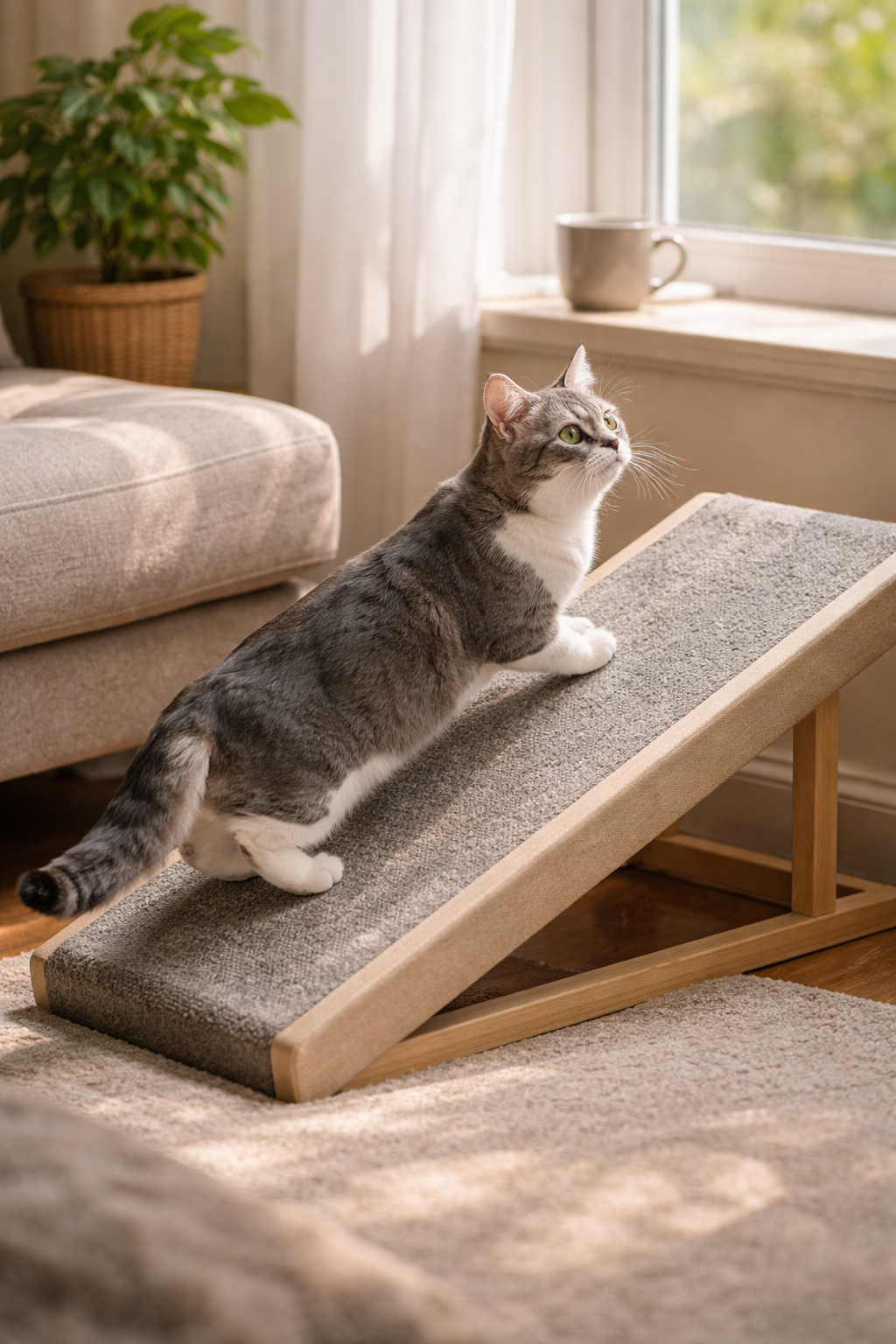
Think in ramps instead of jumps. Low, wide steps or small stairs to the sofa and the window seat take pressure off the joints and spine. Food and water bowls belong at ground level, as does the litter box – with a low entry so that the animal does not have to hyperextend its spine every time it goes. Use soft surfaces instead of hard edges. And be careful with classic cat trees with high, open platforms: what is a playground for a normal cat becomes a fall hazard here.
Exercise and play despite short legs
Movement remains important – but at ground level. Feather wands just above the carpet, balls, sniffing mats, and puzzle boards where treats can be hidden. This keeps the head challenged and the body moving without the animal needing to climb high. Obesity is the biggest enemy here, and that brings us to the really decisive lever.
Healthy weight = relieved joints: the right nutrition
Why every gram counts
For a cat with already incorrectly loaded joints, every extra kilo acts like a fire accelerant. More weight means more pressure on the intervertebral discs, hips, and the already plagued front legs – and thus faster wear and tear, meaning earlier and more severe osteoarthritis. For a normally built cat, obesity is unhealthy. For a short-legged one, it is downright dangerous.
Lots of meat, few frills
Cats are obligate carnivores – that's not a marketing slogan, it's biology. Their metabolism is designed for animal protein, not grain fillers and sugar. A meat-rich, grain-free, and sugar-free diet keeps the muscles stable and prevents the fat pads that short-legged animals tolerate so poorly. That is exactly what we stand for at RumbleBox – under the simple principle "less is more": real meat, no unnecessary ballast, no artificial colors or binders.
Before buying: Deciding responsibly
If you are playing with the idea of getting a short-legged cat, this is the uncomfortable part. I will not mince my words: With a breed that is listed as a "torture breed" in the animal welfare discussion, the most honest and responsible decision is often not to buy one.
- Reputable breeders never push for a quick sale and show the parent animals in the domestic environment.
- Animal health comes before appearance – anyone advertising with "extra short legs" as a sales argument is a warning sign, not a seal of quality.
- Mating two short-legged animals is a no-go (keyword: non-viable embryos).
- Ask for veterinary examinations and vaccinations – in writing.
Checklist for aspiring owners:
- Have I understood that short legs are not a "style" but a skeletal defect?
- Can I ensure a barrier-free apartment long-term?
- Am I prepared for potential veterinary costs for joints, spine, and possibly respiratory tracts?
- Have I thought about the alternative – a healthy house cat from a shelter that hasn't been born with a risk of pain?
Conclusion: cute, but with responsibility
Cats with short legs trigger a reflex – you want to cuddle them immediately. Exactly this reflex has created an entire market. Behind the waddling steps, however, is a genetic mutation that brings pain, movement restrictions, and serious health risks. Anyone who already has such an animal can enable it to have a good life with a barrier-free environment, plenty of ground-level activity, and, above all, a consistently healthy, lean diet. Anyone considering buying one should look twice – and if in doubt, give a healthy cat a home. After all, being cute and being healthy should not be a contradiction.
FAQ – Frequently asked questions about cats with short legs
How old do Munchkin cats get?
With good care and a healthy weight, Munchkins reach a life expectancy in the range of other house cats – often well over a decade. The crucial thing is not the age itself but the quality of life: joint and spinal problems can burden everyday life early on, which is why weight management and regular veterinary check-ups are so important.
Can short-legged cats jump and climb?
To a limited extent yes, but nowhere near like a normally built cat. Higher jumps are difficult for them, and precisely this restricted natural movement behavior is one of the main criticisms of animal welfare organizations. Ramps and low climbing aids are therefore not a luxury, but a necessity.
Is the Munchkin cat allowed in Germany?
There is no explicit "Munchkin ban," but the ban on torture breeding according to § 11b of the Animal Welfare Act prohibits breeding that leads to hereditary suffering and damage. Several organizations and reports classify the Munchkin exactly here. The breeding thus operates in a legally highly controversial gray area.


Thank you for reading this far – it really means a lot to us! We hope you found something useful and maybe your cat is already looking forward to a little something extra. See you soon and lots of purrs!
By the way
Many cat owners pay close attention to the ingredients in their cat's main food , but often forget about treats .
Snacks often contain sugar, grains and artificial additives that can be harmful to health in the long run.
Anyone who truly wants to feed their cat a completely healthy diet should also rely on natural ingredients here:
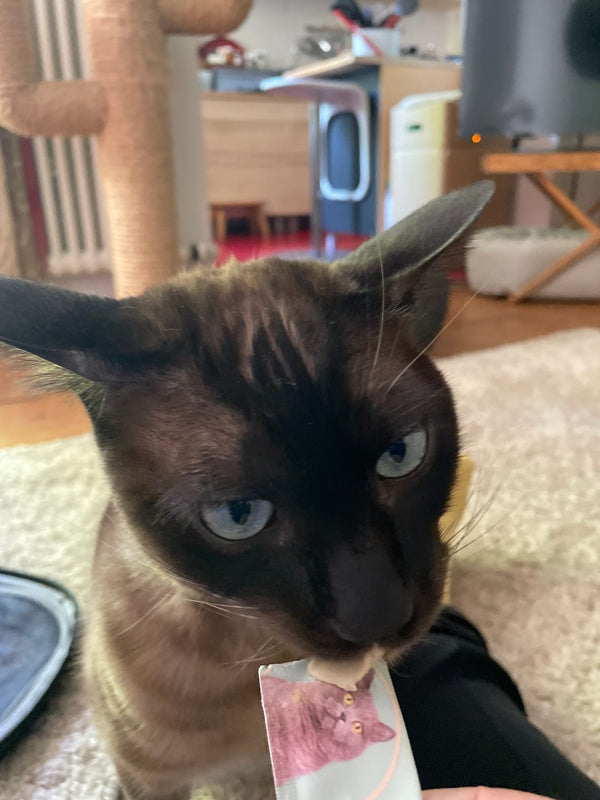
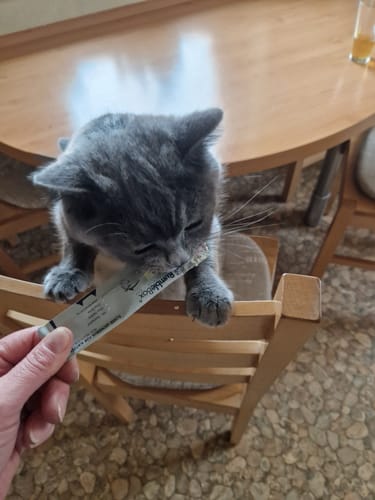
Hypoallergenic treats without additives – naturally from RumbleBox. Perfect as a reward, during training, or simply as a snack.
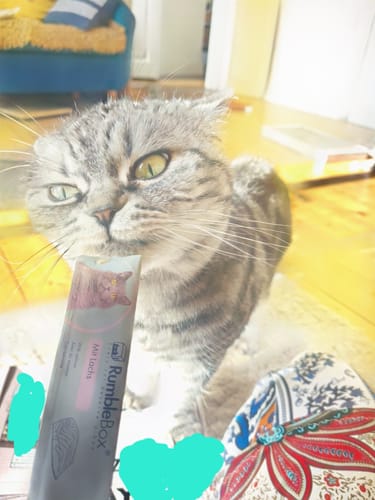
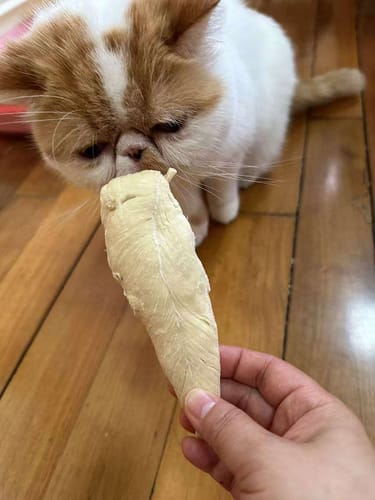
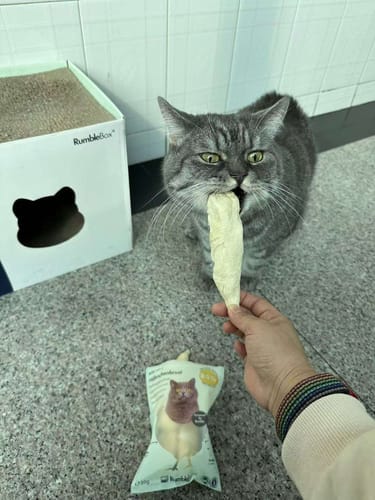
Over 2,500 cats have already switched to healthy snacks!
💚


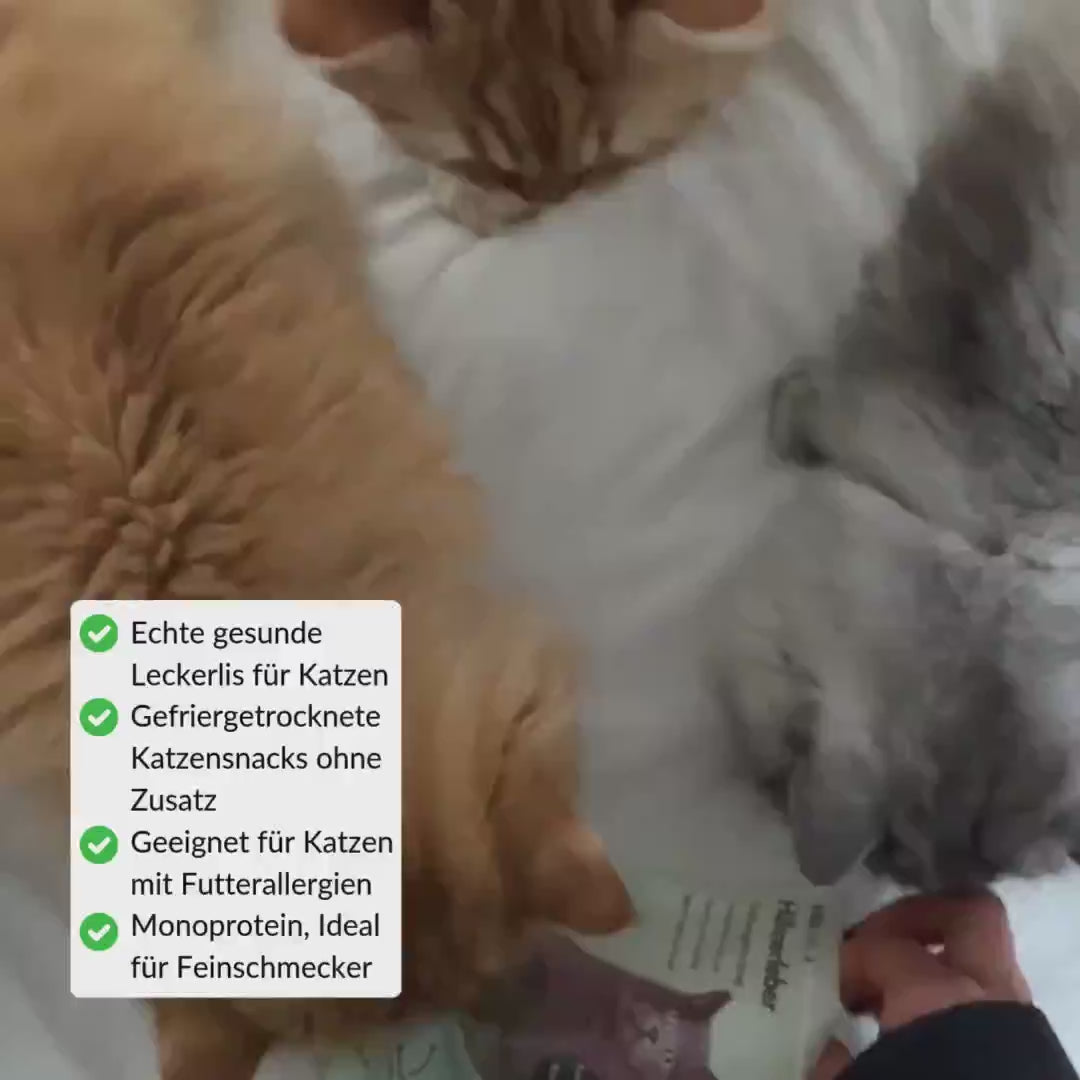


100% Duck Breast Monoprotein 50g
Description
FREEZE-DRIED CAT SNACKS: 100% DUCK BREAST – NATURAL & NUTRITIOUS
Our freeze-dried cat snacks made from 100% duck breast are the perfect choice for cats who love pure meat snacks. The extra-large pieces are ideal for cats who like to bite hard—at the same time, they encourage their natural chewing instinct and support dental care.
Whether as a daily reward, monoprotein treat for cats or high-quality dried duck breast for cats with special needs – this freeze-dried cat snack stands for species-appropriate nutrition without compromise.
WHY OUR DUCK BREAST SNACKS ARE CONVINCING
- 100% natural : Pure duck breast – no grains, sugar or additives.
- Large pieces for extra enjoyment : Each duck breast is approx. 10 cm long, ideal for enjoyable chewing.
- Fresh meat : Direct from the farm – each 50g pack contains approximately 250g of fresh duck breast.
- Rich in nutrients : High-quality protein and valuable fatty acids for a shiny coat and strong muscles.
- Healthy teeth : The solid pieces promote chewing and support dental care.
- Monoprotein and well tolerated : Unprocessed duck breast for a healthy, species-appropriate diet.
PERFECT FOR ALLERGIC CATS AND SPECIAL NEEDS
Our freeze-dried cat snacks are not only delicious but also extremely well-tolerated. They are ideal as healthy treats for cats or as food for cats with allergies.