Sugar in cat food: How harmful is it for cats?
Can cats eat sugar? Why that's not a good idea
Cats: Pure carnivores
Historically, cats had little need for sugar. Scientists analyzing the nutritional composition of mice found that they contain only small amounts of carbohydrates in the form of simple and complex sugars . The vast majority of a mouse's diet consists of protein, fat, and water.

Cats are obligate carnivores by nature, as are tigers, lions, and many other species. Unlike dogs , which are omnivores , a cat's diet consists almost entirely of meat.
Cats cannot taste sugar.
Our cats have between 400 and 500 taste receptors on the top of their tongues. Unfortunately, they cannot perceive sweetness . These receptors primarily help cats recognize fresh meat . This allows them to distinguish between fresh and spoiled meat in the wild.
Cats are also very sensitive to bitterness , which helps them avoid ingesting potentially harmful substances. Their umami receptors also explain why our feline friends enjoy both chicken and fish so much.
Cats cannot digest sugar well.
Our beloved cats are physiologically unable to process sugar. Unfortunately, their saliva does not contain amylase . This is an enzyme that breaks down starch and sugar in food into smaller molecules that the body can more easily absorb.
Cats are obligate carnivores and therefore lack the enzymes to process large amounts of carbohydrates. Consequently, excessive sugar intake cannot be effectively metabolized by cats and is easily converted into fat .
How does sugar harm the health of cats?
While sugar can provide cats with quick energy, it can also cause a number of health problems. First, excessive sugar intake can lead to obesity . This is because cats' bodies are not very efficient at metabolizing the sugar in cat food. As a result, they store the sugar as fat, causing weight gain. This makes the cat less agile and increases the risk of heart disease and joint problems .
Cats have short intestines and, as mentioned earlier, no amylase in their saliva or intestines. This undigested sugar passes quickly through the intestines and causes problems such as indigestion, bloating, or diarrhea.

Long-term consumption of sugary foods can also lead to diabetes, just like in humans. If cats eat too much sugar, it can lead to insulin resistance, which in turn can trigger diabetes. This disease can become chronic in cats, requiring lifelong treatment. The disease can severely impact a cat's quality of life.
Furthermore, sugar has a negative impact on cats' dental health . Too much sugar can lead to the formation of plaque and tartar , which in turn can cause gingivitis and other dental problems.
What should be included in healthy cat food?
Now you know why cats should avoid sugar when choosing cat food. Of course, in addition to sugar, cats should also avoid gluten, starch, colorings, gelatin, and preservatives.
A nutritious cat food should be based on high-quality animal protein . The right amount of fat and clean water are also important factors for a cat's health.


Thank you for reading this far – it really means a lot to us! We hope you found something useful and maybe your cat is already looking forward to a little something extra. See you soon and lots of purrs!
By the way
Many cat owners pay close attention to the ingredients in their cat's main food , but often forget about treats .
Snacks often contain sugar, grains and artificial additives that can be harmful to health in the long run.
Anyone who truly wants to feed their cat a completely healthy diet should also rely on natural ingredients here:
Hypoallergenic treats without additives – naturally from RumbleBox. Perfect as a reward, during training, or simply as a snack.
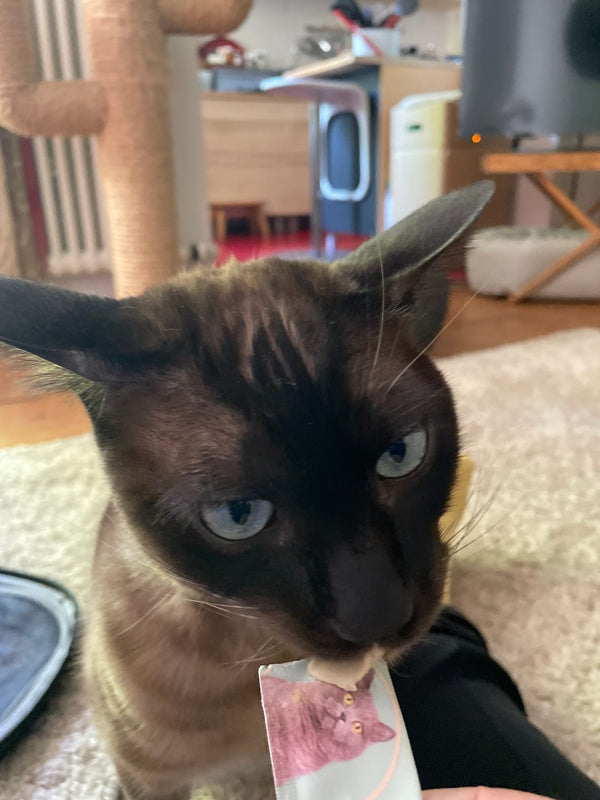
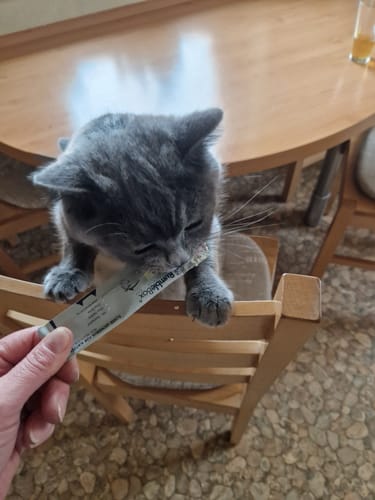
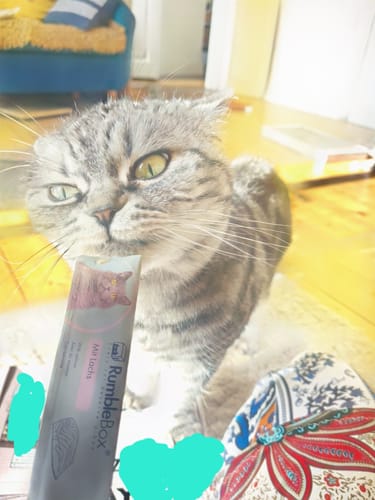
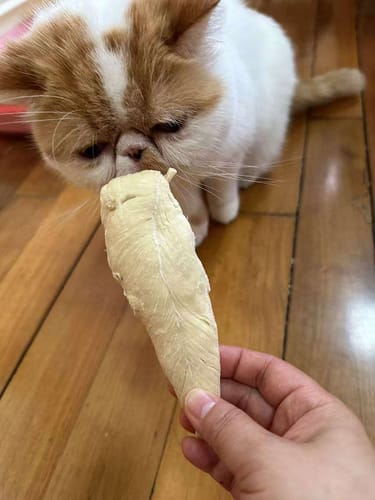
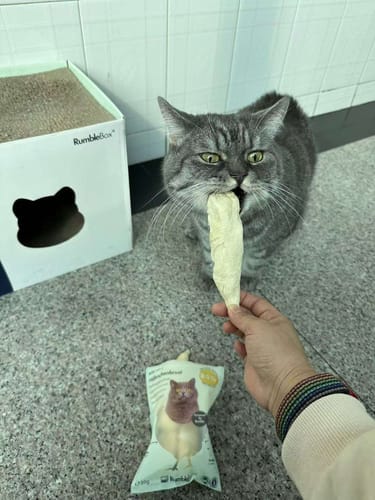
Over 2,500 cats have already switched to healthy snacks!
💚


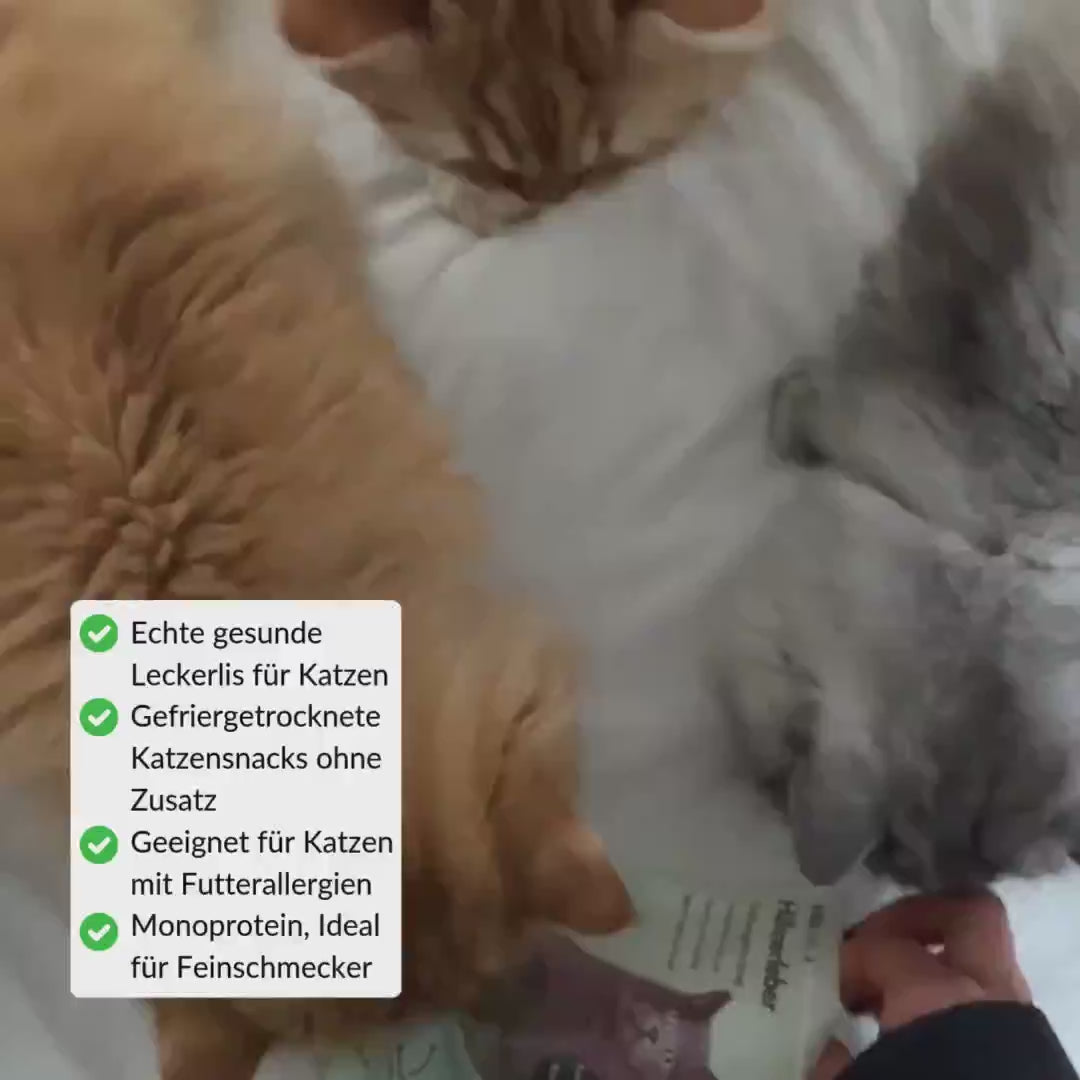


100% Duck Breast Monoprotein 50g
composition
Description
FREEZE-DRIED CAT SNACKS: 100% DUCK BREAST – NATURAL & NUTRITIOUS
Our freeze-dried cat snacks made from 100% duck breast are the perfect choice for cats who love pure meat snacks. The extra-large pieces are ideal for cats who like to bite hard—at the same time, they encourage their natural chewing instinct and support dental care.
Whether as a daily reward, monoprotein treat for cats or high-quality dried duck breast for cats with special needs – this freeze-dried cat snack stands for species-appropriate nutrition without compromise.
WHY OUR DUCK BREAST SNACKS ARE CONVINCING
- 100% natural : Pure duck breast – no grains, sugar or additives.
- Large pieces for extra enjoyment : Each duck breast is approx. 10 cm long, ideal for enjoyable chewing.
- Fresh meat : Direct from the farm – each 50g pack contains approximately 250g of fresh duck breast.
- Rich in nutrients : High-quality protein and valuable fatty acids for a shiny coat and strong muscles.
- Healthy teeth : The solid pieces promote chewing and support dental care.
- Monoprotein and well tolerated : Unprocessed duck breast for a healthy, species-appropriate diet.
PERFECT FOR ALLERGIC CATS AND SPECIAL NEEDS
Our freeze-dried cat snacks are not only delicious but also extremely well-tolerated. They are ideal as healthy treats for cats or as food for cats with allergies.