Lilies are toxic to cats: How dangerous they really are & what to do in an emergency
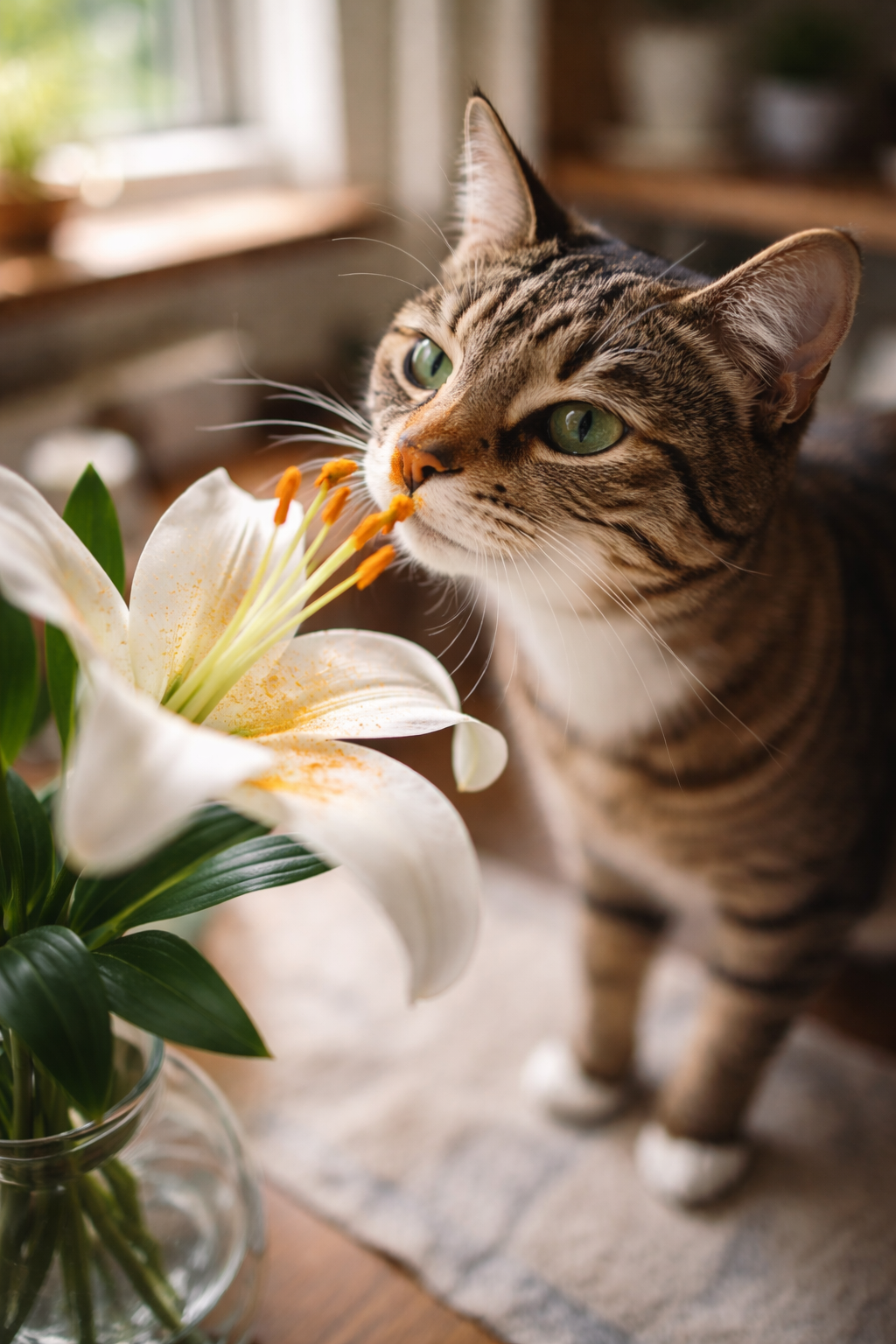
A bouquet of lilies on the dining table, plus a curious cat jumping onto the edge of the table in the evening – this is not a harmless scene. It is one of the most common emergency situations that veterinarians see in the spring and summer. If you have Googled "are lilies toxic to cats" because your cat has just nibbled on a blossom or licked the vase water: read the section on emergencies below first, call your veterinary practice at the same time, and come back afterwards. Here, every hour literally counts.
For everyone else – cat owners who like plants and want to know what is actually dangerous and what is merely internet panic – I have compiled the reliable facts. The source is not just any guidebook, but, among others, the Tierklinik Hofheim and the German Group for Feline Medicine (Deutsche Gruppe Katzenmedizin).
Are lilies toxic to cats? The most important facts at a glance
Yes. And not "a little bit." True lilies of the genus Lilium and daylilies (Hemerocallis) are among the most dangerous plants that can ever be in a household with cats. This is not an exaggeration from an animal blog – the Tierklinik Hofheim writes just as clearly: "Even the ingestion of a small amount (less than one leaf) can lead to death in a cat."
Three things that many underestimate:
- All parts of the plant are toxic. Leaves, blossoms, stems, pollen – and the water in the vase. Exactly what cats love to lap up.
- It doesn't require a "meal." According to Katzenmedizin.info, a bit of pollen that falls into the fur and is licked off while grooming is sufficient.
- The poison has not yet been fully identified. There is no antidote. Treatment targets the damage, not the toxin itself.
Anyone generally researching toxic plants for cats should put lilies at the very top of their blacklist – even ahead of many classics that have a worse reputation but are more harmless.
Which lilies are toxic? Overview of the most dangerous species
The tricky part: "Lily" is on many plant labels, and not all of them are true lilies. The highly toxic candidates almost all belong to Lilium or Hemerocallis. Here are the species specifically mentioned by the German Group for Feline Medicine and the Tierklinik Hofheim – plus the harmless namesakes with which they are constantly confused.
| Highly toxic to cats | Scientific name |
|---|---|
| Daylily | Hemerocallis spp. |
| Easter lily | Lilium longiflorum |
| Tiger lily | Lilium lancifolium (tigrinum) |
| Stargazer / Oriental lily | Lilium orientalis |
| Asiatic lily | Lilium x asiatica |
| Madonna lily | Lilium candidum |
| Oriental lily / Japanese lily | Lilium speciosum |
And now the all-clear, which is just as important – because false panic helps no one:
| Called "lily," but is not a true Lilium | What it really is |
|---|---|
| Peace lily (Spathiphyllum) | Irritates the mouth and throat with calcium oxalate crystals – unpleasant, but not a lily poisoning leading to kidney failure. |
| Calla lily (Zantedeschia) | Also irritating due to oxalates, not kidney-toxic like true lilies. |
Does that mean peace lilies and calla lilies are "cat-safe"? No. They are toxic, just in a different, usually less life-threatening way. That is a distinction that matters for first aid – but no reason to put them in your living room. Lily of the valley, by the way, which the veterinary groups mention in the same breath, is cardiotoxic and is a separate chapter in itself.
A practical tip from the experience of many pet owners: Look at the stamens. True lilies have those large, rust-colored, staining pollen sacs that ruin shirts and tablecloths – and cat fur too. If orange dust remains on your fingers when handling a bouquet, be cautious.
How does the poison work? Cat poisoning symptoms and disease progression
The progression is nasty because it comes in stages – and the first stage seems to subside deceptively after a few hours before the actual drama begins.
The Tierklinik Hofheim describes it as follows: The toxin takes effect after just a few hours. First come gastrointestinal symptoms – vomiting, increased salivation, the cat stops eating. Then, later, neurological signs: tremors, "head pressing" against walls, in the worst case, seizures. And after 3 to 5 days, what it is really all about: acute kidney failure.
This is exactly where the trap lies. A cat that vomits once in the morning and seems fit again by noon looks "recovered" to the owner. Internally, however, the poison may have long been attacking the kidneys. The German Group for Feline Medicine describes what happens next: The kidneys can no longer perform their task, waste products accumulate in the body, and in the most severe cases, the cat no longer produces any urine. Enlarged, painful kidneys are a finding that the veterinarian can detect during an examination.
Warning signs for which I would not wait a second if lilies are or were in the household:
- Sudden drooling, vomiting, abrupt loss of appetite
- Apathy, "depression," withdrawal
- Noticeably high or noticeably low urine output
- Pollen dust in the fur or on the mouth
The cat's kidney failure is what kills – not the initial vomiting. Anyone who relies on "waiting to see if it gets better" is waiting for the wrong symptom.
Suspected poisoning? What to do in an emergency
This is where it gets concrete, and this is where numbers count. The Tierklinik Hofheim states it soberly and unmistakably: With intensive treatment within the first 6 hours after ingestion, the chances of preventing kidney failure are "still quite good."
What you should do, in this order:
- Call the veterinary practice or animal clinic immediately – and state that it concerns potential lily poisoning. That is a word taken seriously over the phone. Ask if you should come in directly.
- Remove pollen from the fur without the cat licking it off. The veterinary experts advise: wipe it off with a damp cloth so that even more pollen is not ingested during grooming. If possible, gently prevent the cat from grooming until the fur is clean.
- Bring the plant with you – or a photo. Knowing which type it was can be important for the assessment.
- Drive off. Even at night. Lily poisoning is exactly the kind of case for which emergency services exist.
And what you should definitely not do: do not induce vomiting on your own – no salt, no home remedies from the forums. Inducing vomiting is a veterinary decision (in the clinic via injection). Done incorrectly, it can do more harm than good. Also, do not give the cat "milk for calming" or similar things. In the clinic, the stomach will be pumped, activated charcoal administered, and counteracted with aggressive infusion therapy – in severe cases, even with hemodialysis. This is not for the kitchen at home.
Lilies and other animals: Why cats are so specifically at risk
A question I encounter again and again: "My dog also eats everything – why does no one talk about lilies and dogs?" The answer is surprisingly clear. The German Group for Feline Medicine writes that lilies lead to "severe kidney damage in cats," "less so in other species such as dogs." Other veterinary sources, such as the pet guide from Agila, generally classify lilies as non-fatal for dogs – a dog that nibbles on a lily usually gets gastrointestinal trouble, not acute kidney failure.
Why the cat? Honestly, that hasn't been completely resolved – the exact mechanism of action of the toxin itself isn't either. What is known: The feline metabolism is more sensitive to many substances than that of dogs or humans because cats break down certain substances in the liver less effectively. With lilies, this special position is particularly drastic. For everyday life, this simply means: what you have read about lilies and dogs does not apply to your cat.
Lily-free home: non-toxic plants for cats and prevention
The only one-hundred-percent safe measure is the most radical one – and the veterinary experts state it just as directly: "If you own a cat, you should never have lilies in the house." If you are given a bouquet, pass it on to someone without a cat. Trying to put lilies "out of reach" is wasted effort – cats climb, jump, and find paths we cannot imagine.
There are enough beautiful, fragrant alternatives that do not cause drama. Among the non-toxic plants for cats are:
- Spider plant (which ironically is called a "lily" in German, but is harmless and loved by cats)
- True Kentia palm and other indoor palms
- Catnip and cat grass as a targeted "nibbling option"
- Herbs like basil or thyme on the windowsill
Do not rely on your gut feeling with every new plant. The list of poisonous plants from International Cat Care and the pet overviews from The Spruce Pets are the two reference works I open before every plant purchase. Two minutes of research before something green comes into the house – that is the cheapest insurance there is.
And a simple trick against nibbling curiosity: Give the cat something of its own. A bowl of cat grass distracts amazingly reliably from the expensive houseplant.
Frequently Asked Questions (FAQ) about lilies and cats
Is the pollen alone dangerous?
Yes. The Tierklinik Hofheim explicitly identifies the pollen, "which is licked off the fur," as a serious danger. A leaf does not have to be eaten – pollen ingested during grooming is enough. That is why wiping the fur with a damp cloth is one of the first immediate measures.
Are peace lilies and calla lilies also toxic?
They are toxic, but in a different way. Peace lilies (Spathiphyllum) and calla lilies (Zantedeschia) contain calcium oxalate crystals that irritate the mouth and throat – unpleasant and worth a vet visit, but they do not trigger the kidney-toxic profile of true lilies. Still: no reason to bring them into the living room with the cat.
What to do if my cat only licked the vase water?
Treat it as an emergency. According to both veterinary sources, lily vase water is considered a real danger. Call the veterinary practice immediately and describe what happened. "Just a little water" is not a calming sentence with lilies – do not wait for symptoms.
Conclusion: Lilies do not belong in a cat household
If you take only one sentence from this text: are lilies toxic to cats is not a vague warning, but a hard medical fact – less than one leaf can be fatal, all parts of the plant including pollen and vase water are involved, and the only reliable protection is: no lilies in the house. Period.
Should something happen, the most important thing is the clock. Treated within 6 hours, the chances are good; after 18 hours, hardly any. So don't wait, don't Google-until-it-gets-worse, but call, wipe the fur, drive off. And in everyday life, ensure that your cat lives out its curiosity on something that is good for it – safe cat grass, a non-toxic plant, and an appropriate reward of real meat instead of risky nibbling on a bouquet of flowers.
Further & external sources
- Tierklinik Hofheim – "Lilies are – especially for cats – highly toxic!" (Dosage, progression, time window)
- German Group for Feline Medicine – "Lilies – beautiful but dangerous..." (Species list, mechanism, first aid)
- International Cat Care – comprehensive list of poisonous plants
- The Spruce Pets – overview of toxic and safe plants for pets


Thank you for reading this far – it really means a lot to us! We hope you found something useful and maybe your cat is already looking forward to a little something extra. See you soon and lots of purrs!
By the way
Many cat owners pay close attention to the ingredients in their cat's main food , but often forget about treats .
Snacks often contain sugar, grains and artificial additives that can be harmful to health in the long run.
Anyone who truly wants to feed their cat a completely healthy diet should also rely on natural ingredients here:
Hypoallergenic treats without additives – naturally from RumbleBox. Perfect as a reward, during training, or simply as a snack.
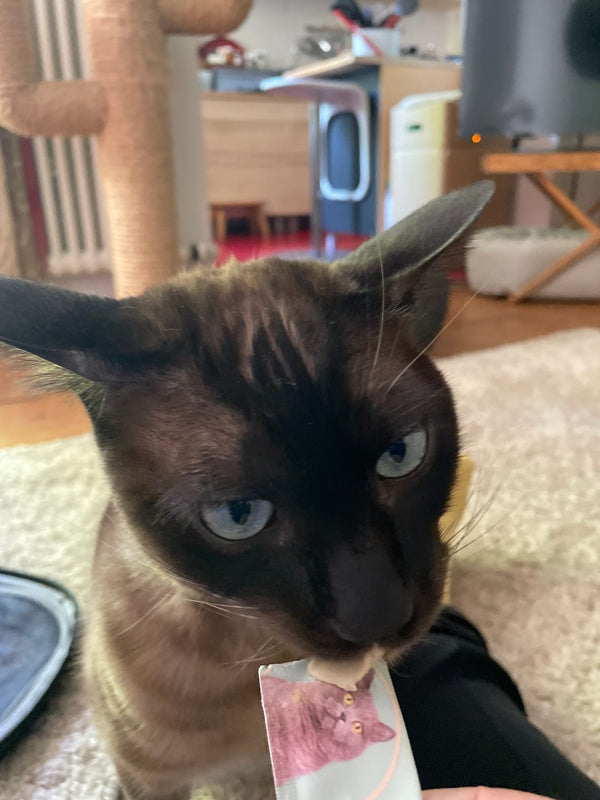
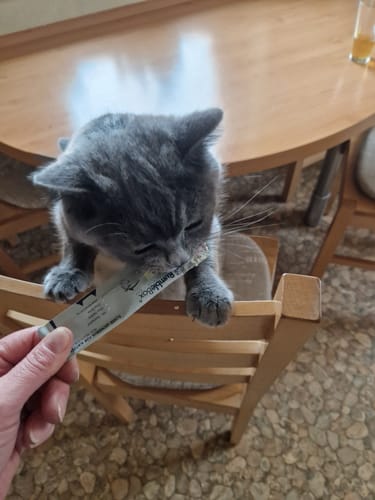
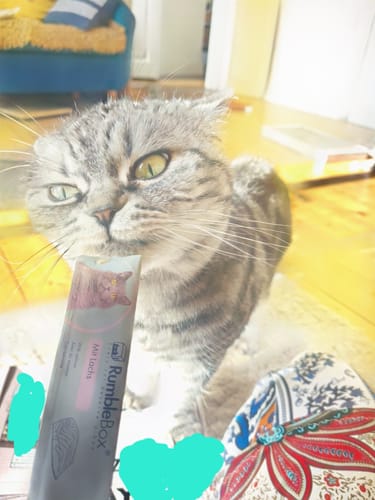
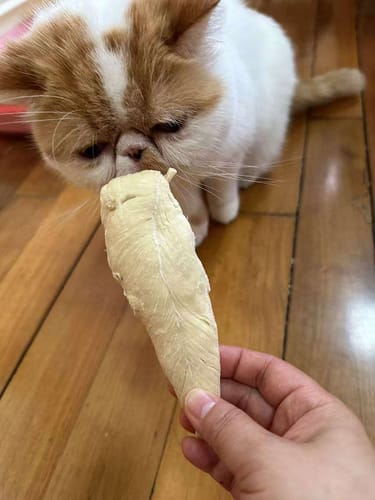
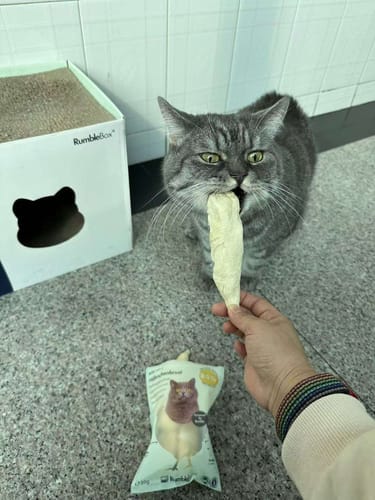
Over 2,500 cats have already switched to healthy snacks!
💚


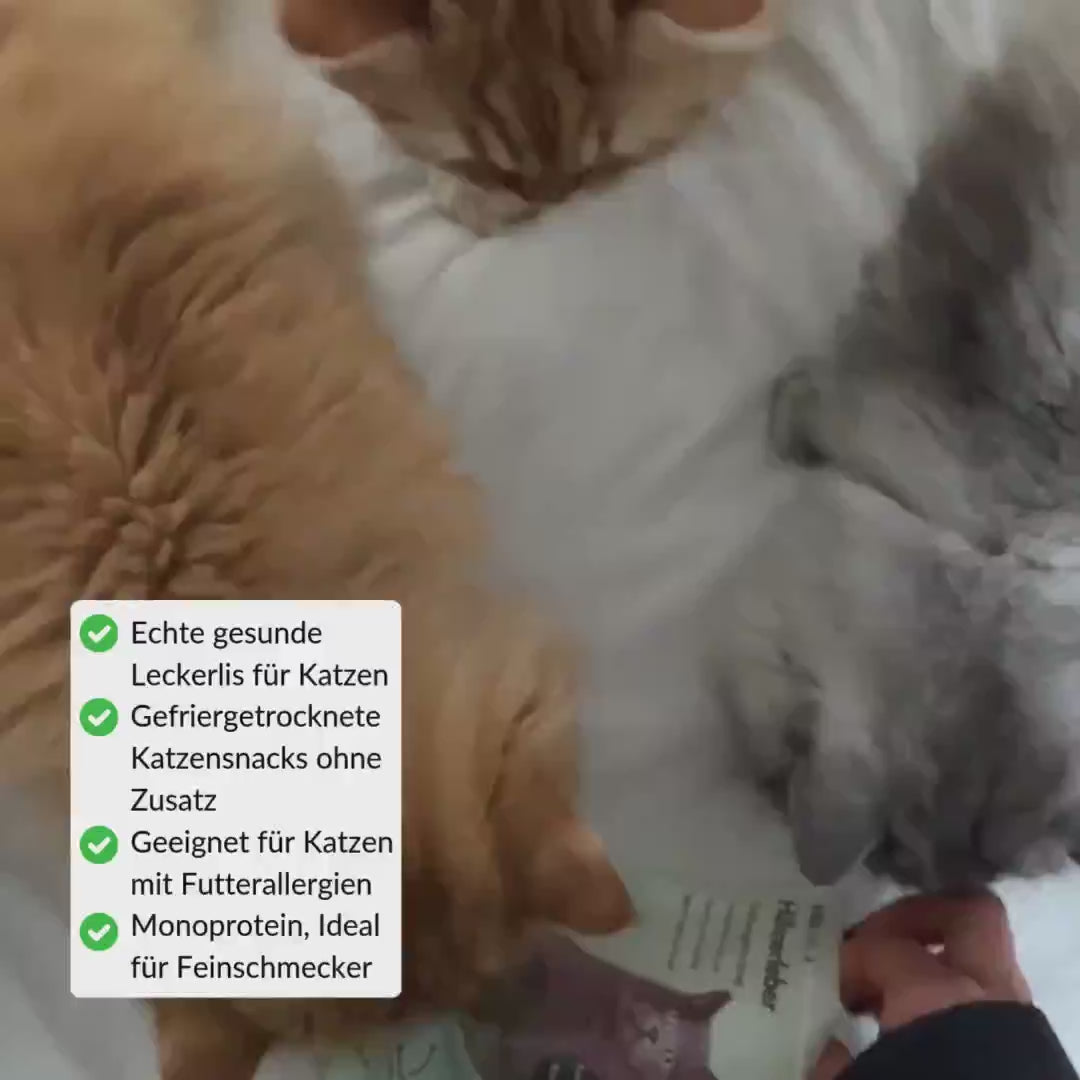


100% Duck Breast Monoprotein 50g
Description
FREEZE-DRIED CAT SNACKS: 100% DUCK BREAST – NATURAL & NUTRITIOUS
Our freeze-dried cat snacks made from 100% duck breast are the perfect choice for cats who love pure meat snacks. The extra-large pieces are ideal for cats who like to bite hard—at the same time, they encourage their natural chewing instinct and support dental care.
Whether as a daily reward, monoprotein treat for cats or high-quality dried duck breast for cats with special needs – this freeze-dried cat snack stands for species-appropriate nutrition without compromise.
WHY OUR DUCK BREAST SNACKS ARE CONVINCING
- 100% natural : Pure duck breast – no grains, sugar or additives.
- Large pieces for extra enjoyment : Each duck breast is approx. 10 cm long, ideal for enjoyable chewing.
- Fresh meat : Direct from the farm – each 50g pack contains approximately 250g of fresh duck breast.
- Rich in nutrients : High-quality protein and valuable fatty acids for a shiny coat and strong muscles.
- Healthy teeth : The solid pieces promote chewing and support dental care.
- Monoprotein and well tolerated : Unprocessed duck breast for a healthy, species-appropriate diet.
PERFECT FOR ALLERGIC CATS AND SPECIAL NEEDS
Our freeze-dried cat snacks are not only delicious but also extremely well-tolerated. They are ideal as healthy treats for cats or as food for cats with allergies.