Is the spider plant toxic to cats? What science says – and what you really need to consider
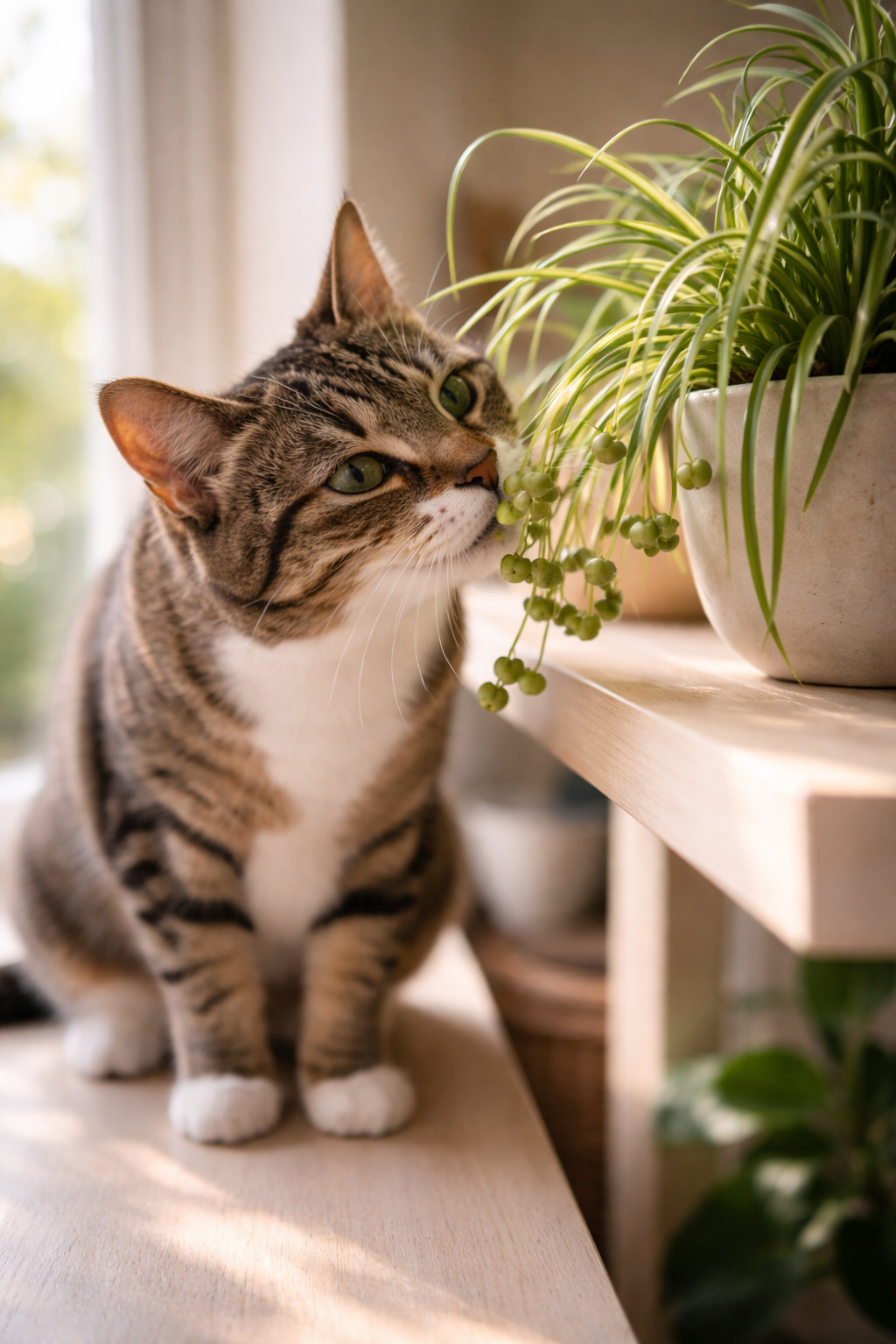
It’s that little spectacle almost every cat owner knows: the cat stands on the windowsill, eyes the spider plant, and then – a targeted bite into one of those long, striped leaves. And immediately the question shoots through your mind: Is the spider plant toxic to cats? That is exactly what this is about. Short, honest, and without fear-mongering.
Spider plant and cat – why this plant in particular?
The spider plant (Chlorophytum comosum) is found in an incredible number of living rooms. There are reasons for this: it is robust, forgives watering mistakes, grows even in semi-shady corners, and produces those hanging offshoots that dangle like little spiders on thin stems. That’s why it’s called a "spider plant" in English.
And these very dangling offshoots are the problem – at least from the cat's perspective. They move with every draft. They look like prey. For an animal that reacts to movement, a spider plant is practically a no-brainer as a toy. It’s no wonder that the question "is the spider plant toxic to cats" is one of the most Googled plant-related questions in German households.
What you can expect here: first, the clear answer. Then, the details that almost no one talks about – for instance, the matter of the seeds, the persistent myth of the "pollution sponge," and the question of what your cat actually needs if it is constantly nibbling on plants.
The short answer: Is the spider plant toxic to cats?
No. The spider plant is considered non-toxic to cats. Period.
This is not a gut feeling; it is explicitly stated in the authoritative databases. The ASPCA (American Society for the Prevention of Cruelty to Animals) lists Chlorophytum comosum – also known by the names ribbon plant, anthericum, or spider ivy – as "Non-Toxic to Cats." Family Asparagaceae, non-toxic to dogs and cats.
For those who want to read it firsthand in the German-speaking world: the veterinary toxicology database CliniTox of the University of Zurich (Vetpharm) is the go-to resource. It collects information on poisonous and non-poisonous plants for animals and is used by veterinarians and poison control centers. The spider plant does not appear there as a dangerous toxic plant – unlike real problem cases such as lilies of the genus Lilium, which are truly life-threatening to cats.
This means: if your cat nibbles on the spider plant, you don't need to freeze in shock. But – and this is the more honest part – "non-toxic" is not the same as "completely irrelevant." More on that in a moment.
Why cats nibble on plants at all
First of all: nibbling on plants is normal cat behavior. It is not a defect and usually not an alarm signal either. Cats explore their world with their mouths; they pluck, bite, and test textures. Greenery that moves additionally stimulates their hunting instinct.
Some cats also eat greenery to get their digestion moving or to get rid of swallowed hair – the famous gagging followed by a hairball. That is unappetizing, but functional.
It is important to distinguish between two things that are often confused. On one hand, there is curious, occasional nibbling: a bite, a bit of chewing, and then moving on. On the other hand, there is targeted, repeated eating of larger quantities. The latter is worth a closer look – not because the spider plant is dangerous, but because your cat is often trying to tell you something (boredom, lack of stimulation, sometimes also discomfort).
And so there is no misunderstanding here: cats are obligate carnivores. Plants are not a nutrient source for them. A spider plant does not replace a meal, does not provide protein that the cat can utilize, and does not belong in the category of "food." It is entertainment. Nothing more.
When the spider plant does become a problem for cats
Now for the part that most "Is the spider plant toxic to cats?" articles omit.
The seeds are the real issue
The leaves of the spider plant are harmless. The seeds, however, can slightly irritate the gastrointestinal tract. In practice, this is rarely relevant because an indoor spider plant usually doesn't even produce seeds – but if your plant flowers and sets seeds, it is worth placing it out of the cat's reach.
The quantity makes the difference
Even non-toxic plant material remains difficult for a cat to digest. If it eats a large portion of leaves at once, the stomach may rebel: vomiting or diarrhea are possible. This is not poisoning – it’s more the feline equivalent of "eating too much at once." Unpleasant, generally self-limiting, but not comfortable for the cat.
What to look out for
- repeated vomiting over several hours
- persistent diarrhea
- lethargy, the cat retreats and stops eating
- increased drooling or obvious discomfort
In such cases, it is no longer about the spider plant itself – then your cat needs to see a vet, if only because other causes or a different, actually toxic plant could be involved. Better to call once too early than once too late.
Myth check: The "pollution sponge" theory
This gets interesting because two true facts are combined into a flawed conclusion.
Fact one: The spider plant has a reputation for being a good indoor air purifier. This reputation is largely based on a NASA study from the late 1980s that investigated whether plants could filter pollutants like formaldehyde from the air – as part of research for closed space stations. The spider plant performed well.
Fact two: If a plant absorbs pollutants, they end up somewhere – namely, in the plant tissue.
The internet then crafts the theory: "The spider plant stores toxins, your cat eats the leaves, so it poisons itself with stored pollutants." Sounds logical. But it hardly stands up to reality.
The study conditions back then were laboratory – sealed chambers, specifically introduced pollutants. In a normal living room, the amounts that a single potted plant draws from the air are tiny. For a cat to ingest a relevant dose of pollutants via nibbled leaves, the contamination levels and the amount eaten would have to be in dimensions that simply do not occur in everyday life.
My honest assessment: In a highly polluted environment – say, a household with heavy smoking – I generally wouldn't plan on using houseplants as cat toys, just on principle. In the average household, however, the "pollution sponge" danger from the spider plant is not a realistic risk, but an internet legend that persists tenaciously.
"The whole plant is completely harmless." – Almost. The leaves, yes. The seeds are the small asterisk behind the all-clear. Anyone who has a flowering, seed-bearing spider plant should place it out of reach.
"A little nibbling never hurts." – Basically true, but it has a limit: the quantity. Occasional nibbling – no problem. Regularly devouring half the leaves – gastrointestinal irritation possible. The dosage separates the harmless from the unpleasant.
"In a smoking household, the spider plant is a poison risk for the cat." – Exaggerated in that specific form, but the reflex behind it is justified. Not because the plant becomes a poison bomb, but because indoor air that is constantly polluted with tobacco smoke is not something that is good for a cat anyway. The problem is the smoke, not the spider plant.
Safe and cat-friendly: Plants that do your cat good
If your cat obviously has a craving for greenery, give it something that is made for that purpose.
Cat grass – the classic
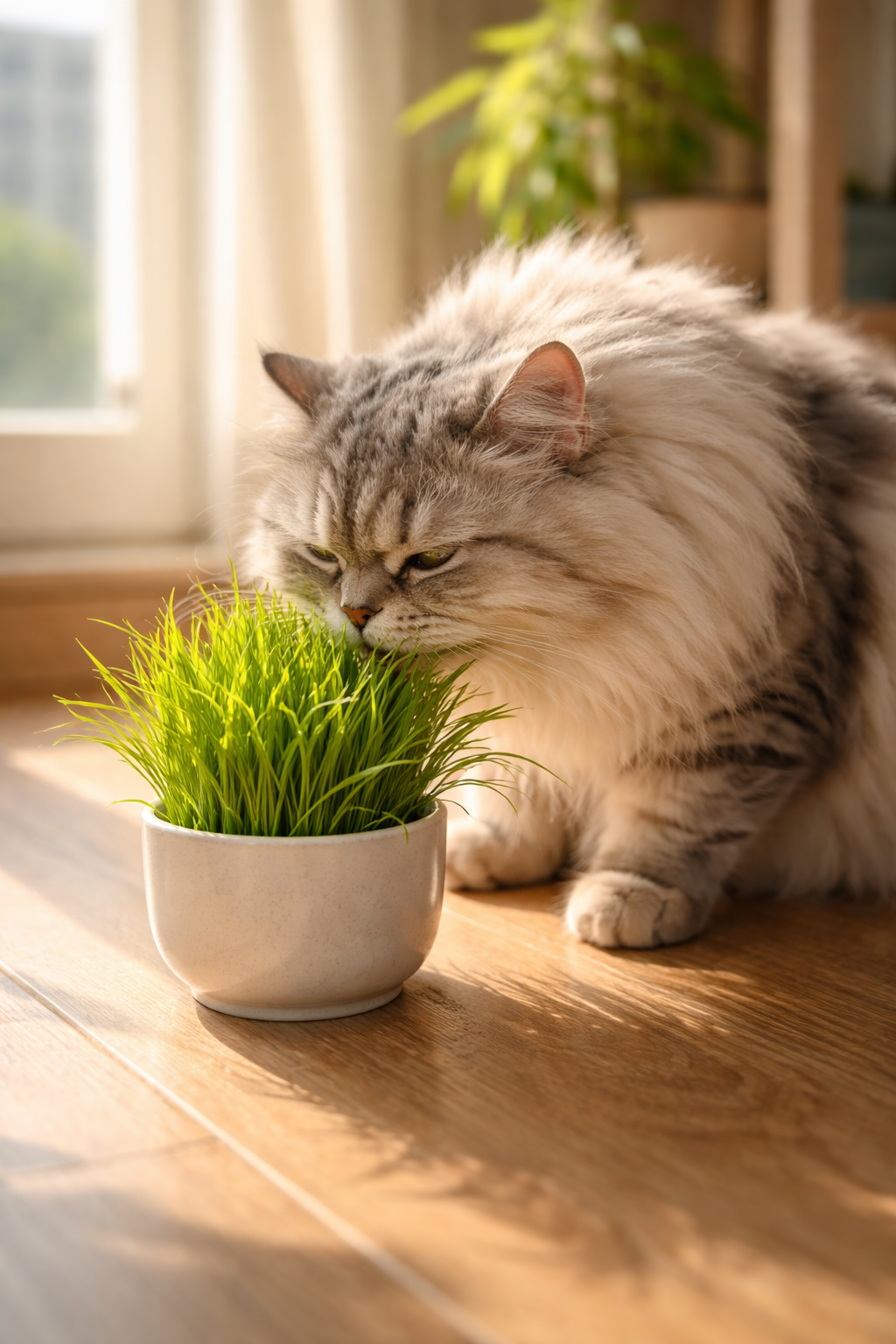
Cat grass (usually young barley, wheat, or oat sprouts) is the most obvious candidate. It is designed precisely for being nibbled on, helps some cats cough up hair, and distracts their attention from your houseplants. A pot on the windowsill, and you're done.
Other non-toxic houseplants
- Kentia palm and Areca palm
- Calathea species (prayer plant)
- True indoor ferns like the sword fern
- Valerian and catnip (as targeted "fun plants")
Besides the spider plant itself, these are also considered non-toxic to cats – it’s worth taking a look at the ASPCA list before every plant purchase:
Indoor garden for the cat
A cat-friendly home doesn't mean "no plants." It means: the right plants, placed wisely. A small green corner with cat grass, catnip, and one or two non-toxic houseplants gives your cat something to explore – and removes the appeal of your Monstera.
Plant nibbling vs. species-appropriate nutrition: What your cat really needs
Here is the point that is often overlooked. A cat that is constantly going for plants is frequently bored or looking for stimulation. The nibbling is then less about "hunger for greens" than it is an outlet.
What helps is not primarily another plant, but more stimulation: hunting games, climbing opportunities, food-searching games – and small, healthy rewards that serve the natural behavior instead of letting it lead to a dead end.
And that is exactly where the difference lies between a risky plant and a sensible snack. A cat is a carnivore. What really appeals to it is meat – no sugar, no grain, no dyes, no unnecessary additives.
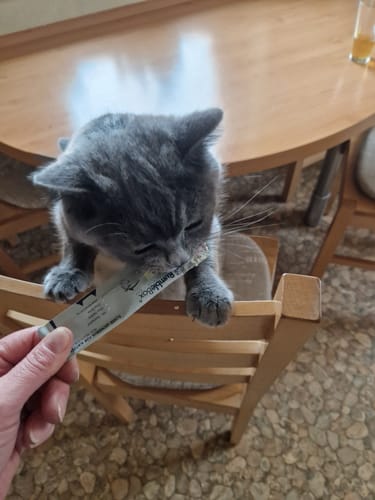
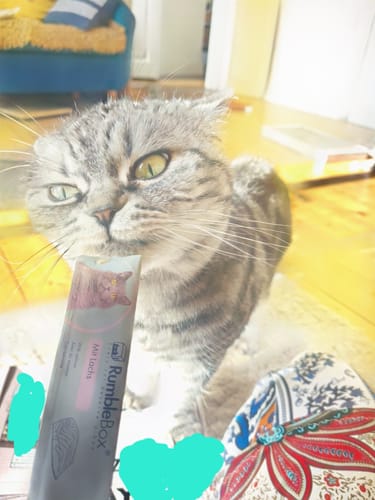
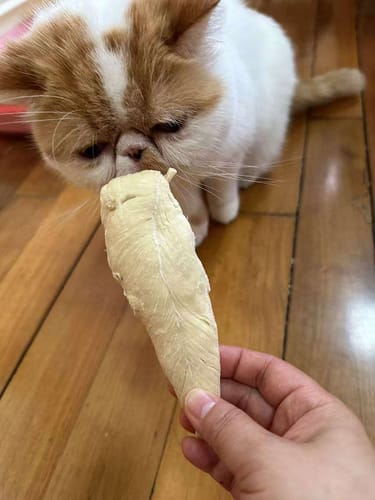
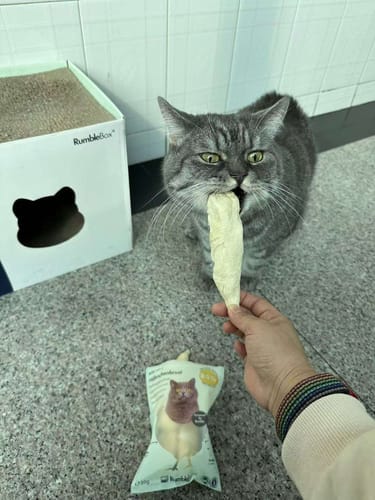
This is also the reason why RumbleBox exists. The idea behind it is simple and a bit old-fashioned: cats don't need highly processed snacks, but real ingredients. The freeze-dried monoprotein snacks consist of 100% meat – such as pure chicken breast – without grain, without sugar, without binders, without artificial colors or preservatives. Gently freeze-dried to preserve nutrients and aroma.
This is particularly interesting for sensitive house cats: a single animal protein per snack makes it easier to avoid intolerances. According to RumbleBox's own information, 95% of cats do not react sensitively to the ingredients contained. As a small training reward, as a topping for a picky cat, or simply as a healthy distraction from the spider plant – this is a more species-appropriate answer to the urge to nibble than any potted plant.
Conclusion: Spider plant and cat – living together in a relaxed way
So, short and without the fluff: The spider plant is not toxic to cats. The ASPCA and the CliniTox database of the University of Zurich classify Chlorophytum comosum as non-toxic. You don't have to ban it from your home.
- Leaves are harmless – keep the seeds out of reach.
- Large quantities can irritate the gastrointestinal tract; see a vet in case of persistent vomiting or diarrhea.
- The "pollution sponge" fear is unfounded in a normal household.
- Anyone wanting to satisfy the urge to nibble should offer cat grass instead of houseplants.
- Constant plant nibbling often means: more stimulation – and a real, meaty snack instead of a risky plant.
With moderation and a few precautionary rules, you can live together in a relaxed way:
FAQ – Frequently Asked Questions
Is the spider plant fatal to cats?
No. The spider plant is classified as non-toxic by the ASPCA and the veterinary toxicology CliniTox database. It is not fatal. The worst that can happen with large amounts is temporary gastrointestinal upset with vomiting or diarrhea.
What should I do if my cat has nibbled on the spider plant?
In the vast majority of cases: nothing. Observe them. If they remain lively and are eating and drinking normally, everything is fine. If they vomit repeatedly, have persistent diarrhea, or appear lethargic, call your vet.
Which plants are truly dangerous to cats?
True lilies (Lilium, Hemerocallis) are highly toxic and life-threatening even in small amounts. Dieffenbachia, pothos, peace lily, oleander, and poinsettia are also among the problematic houseplants. Before buying, it’s worth taking a look at the ASPCA or CliniTox list.
How do I keep my cat away from houseplants?
Offer an attractive alternative – cat grass draws their attention. Place sensitive or seed-bearing plants high up and out of reach. And ensure enough stimulation and healthy snacks so that plant-nibbling doesn't turn into a hobby in the first place.
Sources & further links

Thank you for reading this far – it really means a lot to us! We hope you found something useful and maybe your cat is already looking forward to a little something extra. See you soon and lots of purrs!
By the way
Many cat owners pay close attention to the ingredients in their cat's main food , but often forget about treats .
Snacks often contain sugar, grains and artificial additives that can be harmful to health in the long run.
Anyone who truly wants to feed their cat a completely healthy diet should also rely on natural ingredients here:
Hypoallergenic treats without additives – naturally from RumbleBox. Perfect as a reward, during training, or simply as a snack.
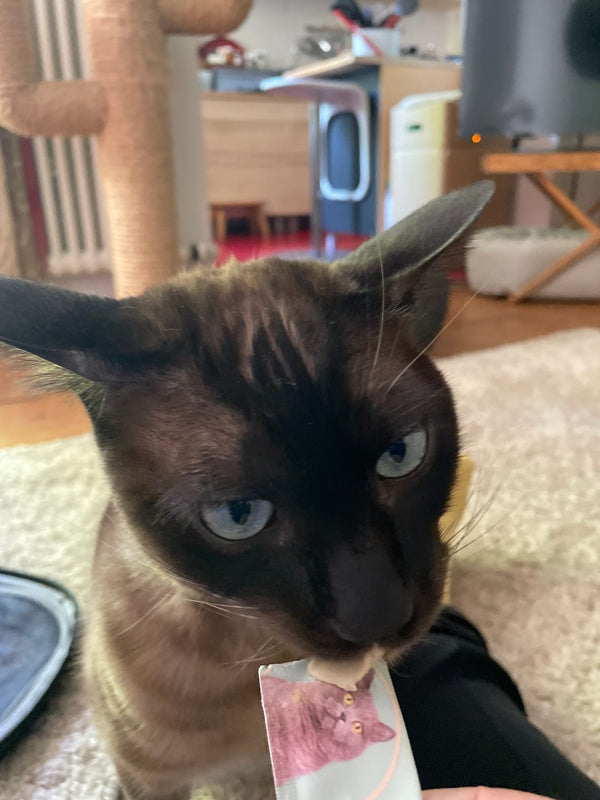
Over 2,500 cats have already switched to healthy snacks!
💚