Are parlor palms toxic to cats? The honest guide for safe feline friends
In short: No, the parlor palm is not toxic to cats. If you are currently frantically googling because your feline friend has chewed on a frond – take a deep breath. Chamaedorea elegans is on practically every reputable safety list. However, "non-toxic" doesn't mean "completely harmless," and it is precisely this nuance that causes some cat owners unnecessary stress or lulls them into a false sense of security. I will explain what the data actually says.
Is the parlor palm toxic to cats? The quick answer first
The parlor palm is non-toxic to cats. This is not a gut feeling, but the classification of the ASPCA, the largest animal welfare organization in the USA, which has its own poison control hotline. Period.
Nevertheless, there are two things you should know before you close your browser. First: If a cat eats larger quantities of plant fibers, it may still get sick – not because of toxins, but because its digestive tract is simply not built for greens. Second, and this is the real crux of the matter: There is a plant that resembles the parlor palm and is actually life-threatening. Confusion is more common than one might think. More on that later.
What is the parlor palm (Chamaedorea elegans)?
The parlor palm is a classic among houseplants – and for good reason. It forgives almost everything: too little light, forgotten watering, dry heating air in winter. It is this very robustness that has brought it into countless living rooms, offices, and waiting rooms.
Botanically, it is called Chamaedorea elegans and originally comes from the humid mountain forests of Mexico and Guatemala. Hence the name. It remains relatively compact, rarely grows higher than one to two meters indoors, and forms fine, feather-like fronds in a rich green. No thorns, no sharp edges, no irritating milky sap.
The many names of the parlor palm
It appears under various names in trade and literature, which sometimes makes research difficult. Commonly used names are "parlor palm" and in German-speaking countries "Zimmerpalme" (room palm) or "Mexikanische Bergpalme" (Mexican mountain palm). The ASPCA also lists it as "Good Luck Palm" and "Bamboo Palm." So if you are searching for the German term "Bergpalme" on an English list and find nothing – you are looking for the wrong word.
Is the parlor palm really non-toxic? What the data says
This is where it gets concrete, because "toxic or not" should not be answered based on a gut feeling.
The authoritative source is the ASPCA (American Society for the Prevention of Cruelty to Animals). In their database of toxic and non-toxic plants, Chamaedorea elegans is clearly listed under "Parlor Palm" as "Non-Toxic to Cats" – non-toxic to cats, non-toxic to dogs. You can check this directly here: ASPCA – Parlor Palm.
In German-speaking regions, it is worth looking at Tox Info Suisse (connected to the poison plant database of the University of Zurich) – the central contact point for poisoning in Switzerland, available at toxinfo.ch. I prefer such toxicological specialist centers over some random plant blog, because real data on poisoning cases converge there.
Why some people still call it "mildly toxic"
And now for the honest nuance that many guides omit: In the German-speaking internet, you read again and again that the parlor palm is "mildly toxic" and can lead to gastrointestinal disorders via fronds or flowers. This information often comes from garden and plant sources, not from toxicology. This is not a contradiction to the ASPCA – it is a question of definition.
"Toxic" in the toxicological sense means: There is a substance that damages the organism. The parlor palm does not have this in relevant quantities. "Upset stomach after eating plant fibers" is something completely different – that also happens with grass. Anyone who puts both in the same boat creates exactly the confusion that keeps cat owners awake at night. My position: The ASPCA classification is the more reliable one, and I would rely on it.
Still having gastrointestinal issues? Possible causes explained
Suppose your cat has gnawed properly on the parlor palm and vomits afterward or has soft stool. Does that mean the plant is toxic after all? Probably not.
Plant tissue naturally contains substances like saponins and, in some species, traces of alkaloids. In the parlor palm, these are – if at all – negligible amounts that do not cause real poisoning. What you are observing is usually a simple mechanical and digestion-related reaction.
Because this is the real point: Cats are obligate carnivores. Their digestive system is designed for prey, not salad. A cat can barely break down plant fibers. If it swallows a larger quantity of tough fronds, the stomach often reacts in the most obvious way – it heaves up the indigestible stuff. This is unpleasant, but as a rule, it is not a poisoning emergency. It's more like you eating a handful of raw grass blades.
The real danger: Confusion with the highly toxic sago palm
If I warn about anything regarding this topic, it is this. The parlor palm is harmless – but a plant that often appears in the same breath and in the same garden section is absolutely not.
Sago palm (Cycas revoluta): deadly resemblance
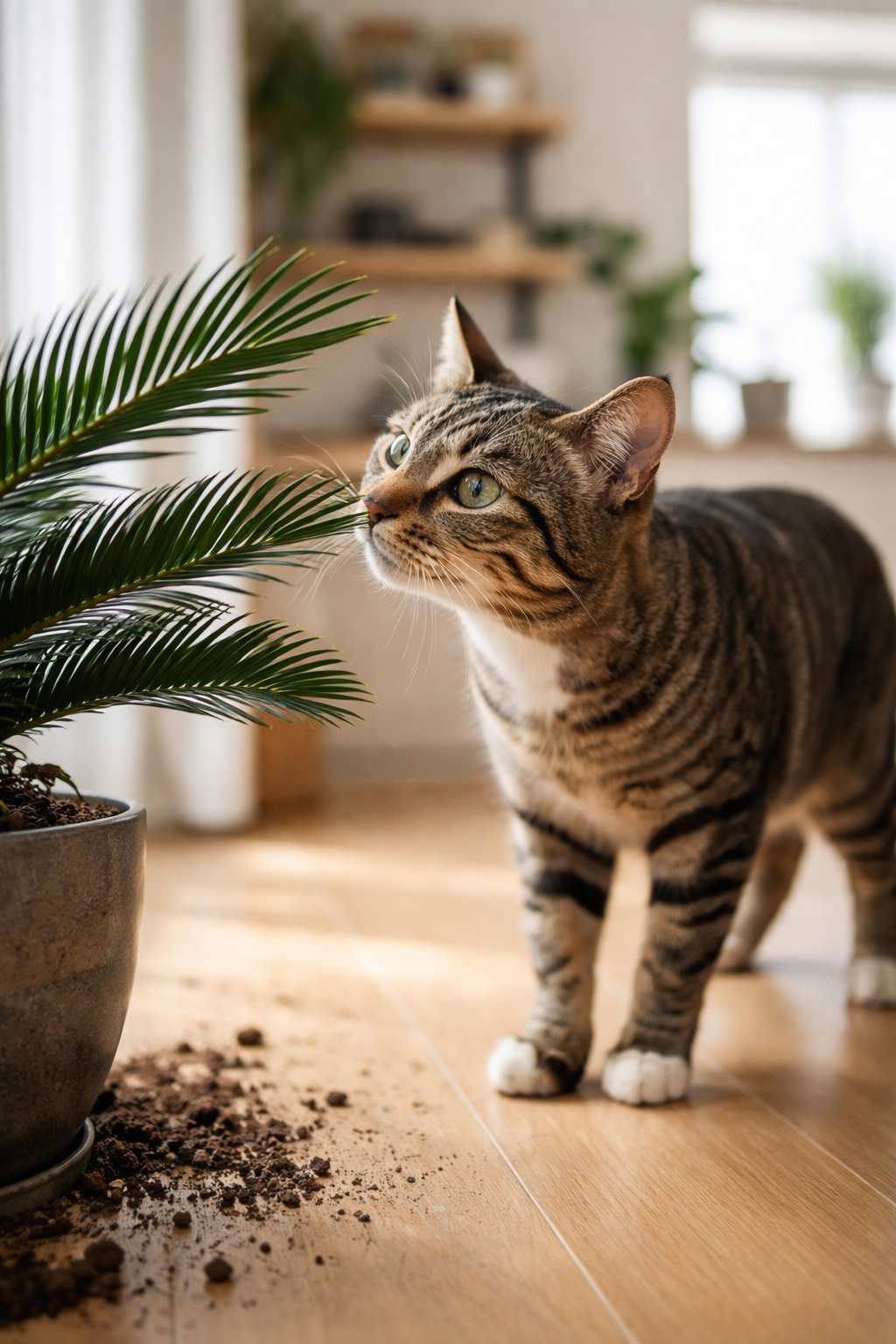
The sago palm is botanically not a real palm, but a cycad. And it is one of the most dangerous indoor and outdoor plants for pets. The ASPCA classifies it as "Toxic to Cats", with the toxin cycasin. The listed symptoms are severe: vomiting, bloody diarrhea, jaundice, clotting disorders, liver damage up to liver failure and death. Even small amounts, especially the seeds, can be fatal. The source: ASPCA – Sago Palm.
That is the difference between "the cat might feel a bit sick" and "the cat ends up in the emergency clinic with suspected liver failure." That is exactly why this section is more important to me than the whole non-toxicity discussion surrounding it.
How to tell the two apart
The true parlor palm has soft, flexible, feather-delicate fronds and a slender, greenish stem. The sago palm appears much stiffer and prehistoric: thick, hard, almost prickly leaves that grow in a circular pattern from a bulbous, scaly "trunk." If a "palm" feels like you could get pricked by it and has a thick, pineapple-like base – stay away, it is very likely a cycad.
Other toxic candidates for confusion
There are other "palms" that are not and can cause problems. The greatest confusion is caused in the plant trade anyway by the imprecise use of the word "palm." My advice: Never buy a plant based solely on the trivial name on the label. Look at the Latin name. Chamaedorea elegans is safe – Cycas revoluta is not.
More than just toxins: The underestimated physical risks of "safe" plants
"Non-toxic" is not the same as "risk-free." This is often forgotten, and it leads to accidents that have nothing to do with toxicology.
Swallowed leaves. Long, tough plant fibers are difficult to swallow and even harder to digest. In the worst-case scenario, they get tangled, irritate the esophagus, or – together with swallowed material – contribute to a blockage. A true bowel obstruction is rare, but it is an emergency.
Tipping pots. A cat jumping onto a windowsill can easily knock over a heavy clay pot. This leads to bruises, cuts from shards, and in case of doubt, a frightened cat shooting through the apartment.
The hidden danger in the soil. Almost everyone underestimates this: It is often not the plant, but the surroundings that are the problem. Liquid fertilizer, pesticides, slow-release fertilizer sticks, and even some potting soil with additives can be problematic for cats. A completely non-toxic parlor palm in freshly fertilized soil is ultimately not a completely harmless combination. Anyone using plant protection sprays should keep the cat away until everything has dried.
Cat-proof indoor greenery: How to protect plant and cat
You don't have to choose between a green apartment and a happy cat. It's about clever placement rather than going without.
Location is everything. Hanging baskets are your best friend. A plant dangling from the ceiling is simply unreachable and uninteresting for most cats. High shelves, closed glass cabinets, a plant room with a door – all legitimate solutions.
Give the cat its own. A "sacrificial plant" is a surprisingly good distraction. A classic is cat grass – specifically intended for the cat, safe to chew on, and often enough of a reason to leave the parlor palm alone.
Non-toxic houseplants for cat households:
- Parlor palm (Chamaedorea elegans)
- Spider plant (Chlorophytum comosum)
- Calathea
- Indoor ferns like the Boston fern
- Bromeliads
- Cat grass as a conscious chewing alternative
When in doubt, always look it up in the ASPCA list first, not afterward.
Why cats chew on plants at all – and what really helps
This is where the real core lies for me. We treat chewing on plants as a problem, but it is a need.
Cats are, as mentioned, obligate carnivores – but the chewing, plucking, and nibbling is deeply ingrained in them. In nature, the cat comes into contact with small amounts of plant material via prey, and chewing on greens helps some animals to regurgitate indigestible matter. That is normal behavior, not a defect.
Only: If the only available activity is the house palm, then the cat will just chew on that. The solution is therefore not just to "put the plant away," but to "offer something better."
And that is exactly where species-appropriate activity comes in. Instead of letting the cat chew on plant fibers it can't digest anyway, give it what it was built for: real meat. At RumbleBox, that is exactly the idea – high-quality, meat-rich snacks without grains, without sugar, without unnecessary additives. Our freeze-dried monoprotein snacks consist of 100% pure meat and are excellent as a reward, for enrichment, or simply to steer the cat's attention away from the windowsill to something meaningful. Combined with a pot of cat grass as a legal chewing target, you have defused most plant dramas before they arise. You can find more about this in the RumbleBox magazine.
First aid: What to do if the cat has eaten plants?
First of all: Keep calm. With the parlor palm, the probability of a real emergency is low.
Observe symptoms. A one-time heave or regurgitation of a frond is usually harmless. Keep an eye on your cat for a few hours. Persistent vomiting, diarrhea, lethargy, drooling, tremors, or breathing problems, however, are warning signs.
When to go to the vet. If the symptoms do not subside, worsen, or you are not sure which plant was eaten – and this is the crucial point, see sago palm – call the vet or the veterinary emergency service.
Never induce vomiting on your own and do not give home remedies on suspicion. If possible, take a photo or a piece of the eaten plant with you – this helps to clearly identify it. A safely identified parlor palm immediately relaxes the vet. An unknown "palm" makes them look more closely.
Conclusion: Parlor palm and cat – a safe combination with a bit of sense
The honest assessment: The parlor palm is one of the few houseplants you can truly breathe easy about. According to the ASPCA, it is non-toxic to cats, and the German-language "mildly toxic" narrative essentially only describes a harmless upset stomach from indigestible fibers – not real poison.
The energy you save should go into the real danger: confusion with the sago palm, which can cause liver failure. And into the invisible risks – fertilizers, heavy pots, swallowed leaves.
- Check plants by their Latin name, not by the label – consistently discard sago palm (Cycas revoluta).
- When in doubt, check the ASPCA database.
- Place sensitive or sought-after plants high up or in hanging baskets.
- Store fertilizers and pesticides out of reach and let them dry after application.
- Offer cat grass as a conscious chewing alternative.
- Satisfy the chewing and activity instinct with high-quality, meat-rich snacks.
- Keep the emergency number of the poison control center handy.
FAQ – Frequently asked questions about parlor palms and cats
Is the parlor palm also toxic to humans?
No, the parlor palm is also considered non-toxic to humans. It is one of the problem-free houseplants, which is one reason why it is popular even in households with small children. Nevertheless, it should not be confused with the highly toxic sago palm.
Are cats allowed to nibble on palm leaves?
Nibbling on the fronds of a real parlor palm is not dangerous because the plant is non-toxic. However, larger quantities can lead to vomiting because cats can barely digest plant fibers. It is better to offer the cat cat grass specifically as a chewing alternative – and cover its chewing instinct with high-quality meat snacks.
Which palms are dangerous to cats?
The most important one by far is the sago palm (Cycas revoluta), which is actually a cycad. It contains cycasin and, according to the ASPCA, can lead to liver failure and death. Real indoor palms like the parlor palm (Chamaedorea elegans) or the Kentia palm, on the other hand, are considered non-toxic. The decisive factor is always the botanical name, not the word "palm" on the sign.


Thank you for reading this far – it really means a lot to us! We hope you found something useful and maybe your cat is already looking forward to a little something extra. See you soon and lots of purrs!
By the way
Many cat owners pay close attention to the ingredients in their cat's main food , but often forget about treats .
Snacks often contain sugar, grains and artificial additives that can be harmful to health in the long run.
Anyone who truly wants to feed their cat a completely healthy diet should also rely on natural ingredients here:
Hypoallergenic treats without additives – naturally from RumbleBox. Perfect as a reward, during training, or simply as a snack.
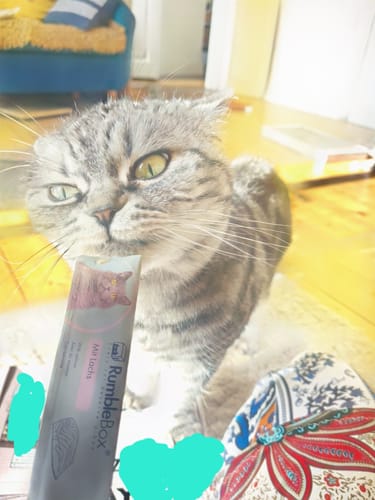
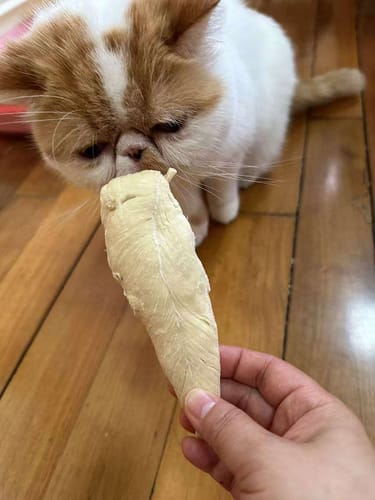
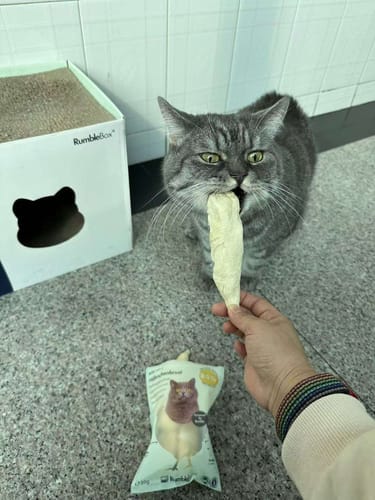
Over 2,500 cats have already switched to healthy snacks!
💚


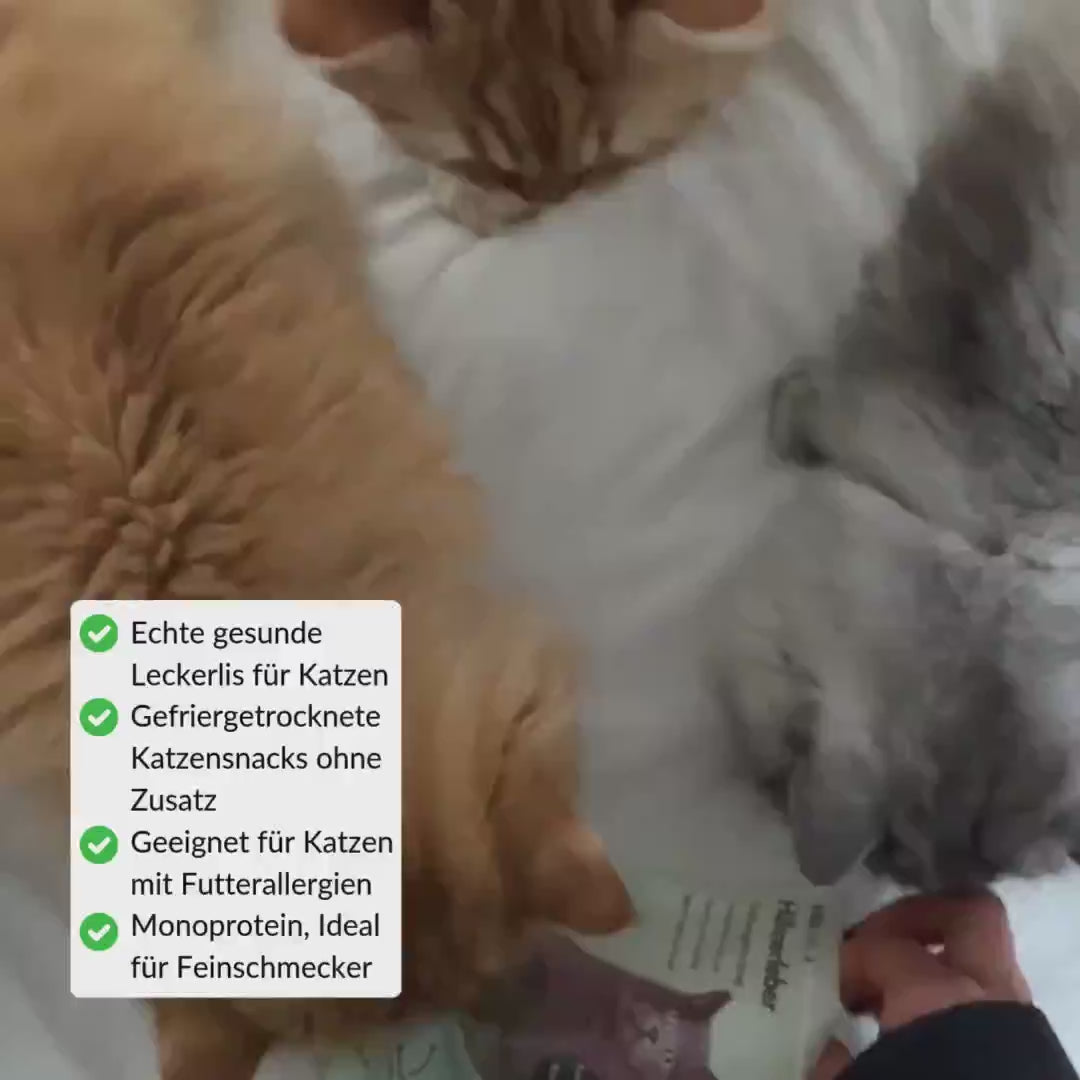


100% Duck Breast Monoprotein 50g
Description
FREEZE-DRIED CAT SNACKS: 100% DUCK BREAST – NATURAL & NUTRITIOUS
Our freeze-dried cat snacks made from 100% duck breast are the perfect choice for cats who love pure meat snacks. The extra-large pieces are ideal for cats who like to bite hard—at the same time, they encourage their natural chewing instinct and support dental care.
Whether as a daily reward, monoprotein treat for cats or high-quality dried duck breast for cats with special needs – this freeze-dried cat snack stands for species-appropriate nutrition without compromise.
WHY OUR DUCK BREAST SNACKS ARE CONVINCING
- 100% natural : Pure duck breast – no grains, sugar or additives.
- Large pieces for extra enjoyment : Each duck breast is approx. 10 cm long, ideal for enjoyable chewing.
- Fresh meat : Direct from the farm – each 50g pack contains approximately 250g of fresh duck breast.
- Rich in nutrients : High-quality protein and valuable fatty acids for a shiny coat and strong muscles.
- Healthy teeth : The solid pieces promote chewing and support dental care.
- Monoprotein and well tolerated : Unprocessed duck breast for a healthy, species-appropriate diet.
PERFECT FOR ALLERGIC CATS AND SPECIAL NEEDS
Our freeze-dried cat snacks are not only delicious but also extremely well-tolerated. They are ideal as healthy treats for cats or as food for cats with allergies.